
Custom Flat Roof Drainage Design
Custom Flat Roof Drainage Design A “flat” roof in Brooklyn is supposed to clear standing water within 24 to 48
Home > Water Drainage Issues
The quick read is to clear the dome and pour water in. If it runs straight down, the outlet was choked and clearing it fixed the flow. If the water still sits with the drain wide open, the slope is the problem and no amount of clearing changes that. We settle which one it is before we quote, because cutting in more drains does nothing for a roof that has no fall to feed them.
A drain only does its job when it sits at the lowest point of the roof and has a clear path down. Plenty of roofs we walk have the drains in the wrong place, set out near a high spot or flush with a deck that never had any slope, so water would have to run uphill to reach them. Just as often the drain is fine and the trouble is below it: a strainer dome packed with leaves and grit off the membrane, a clamping ring that's loosened and let the surface lift around it, or a leader pipe blocked somewhere down inside the wall.
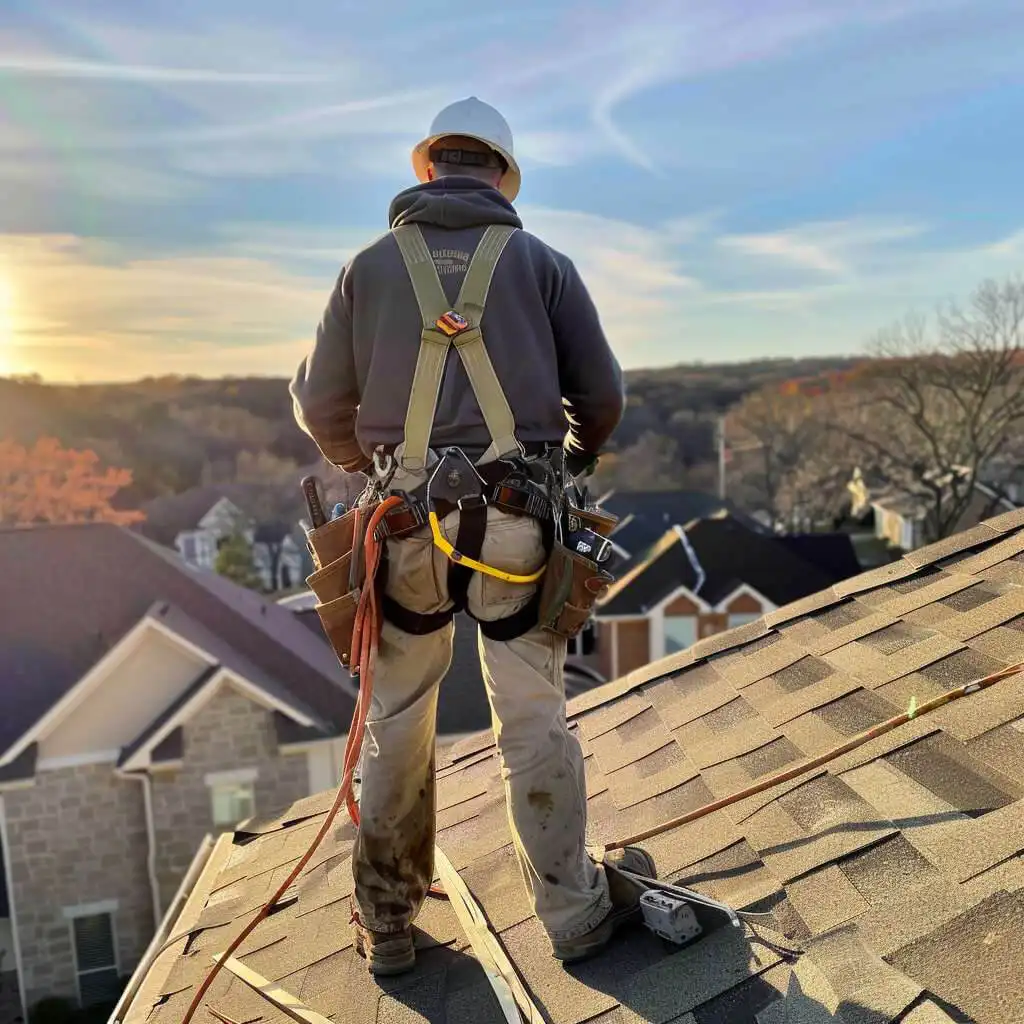
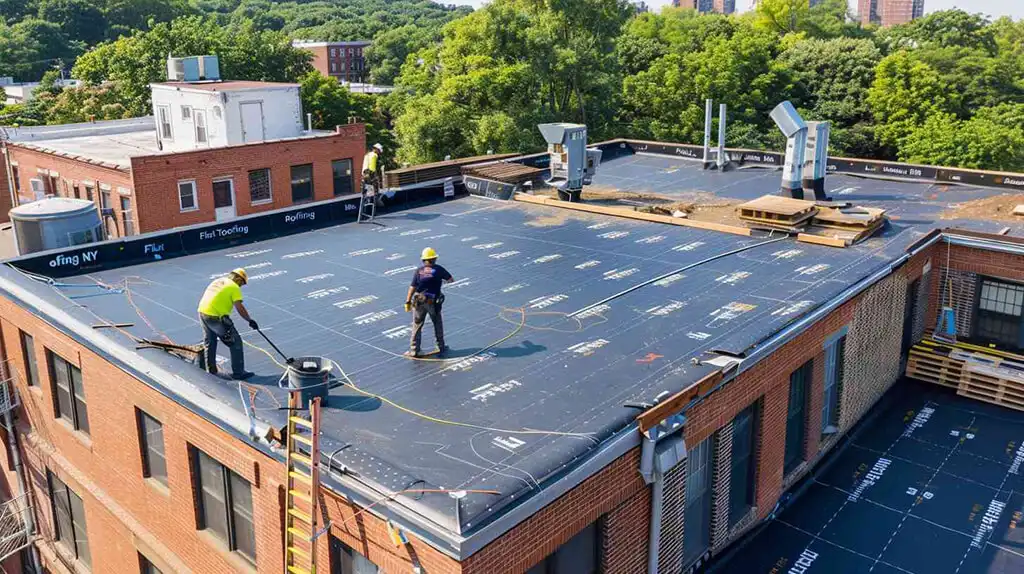
We spend our weeks on flat and low-slope roofs around the borough, and the water that brings owners to this page sits behind a large share of the leaks, blisters, and soft decking we end up repairing. So a drainage call gets treated as a design question, not a patch job. Does the roof still carry the pitch it was built with, are the drains and scuppers actually at the low points, and can the leaders move what a hard Brooklyn summer downpour drops on a wide warehouse deck or a packed restaurant roof in twenty minutes. Apartment buildings, office decks loaded with equipment, prewar roofs that settled decades ago. We read all of them the same way. Licensed and insured in New York, and certified on the membrane systems we cut and re-detail to do the work.
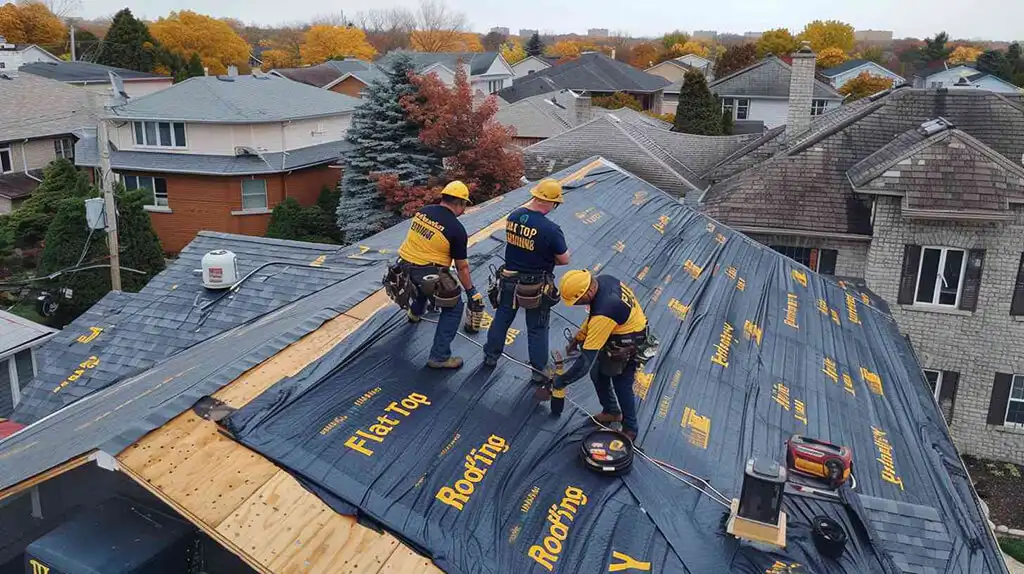
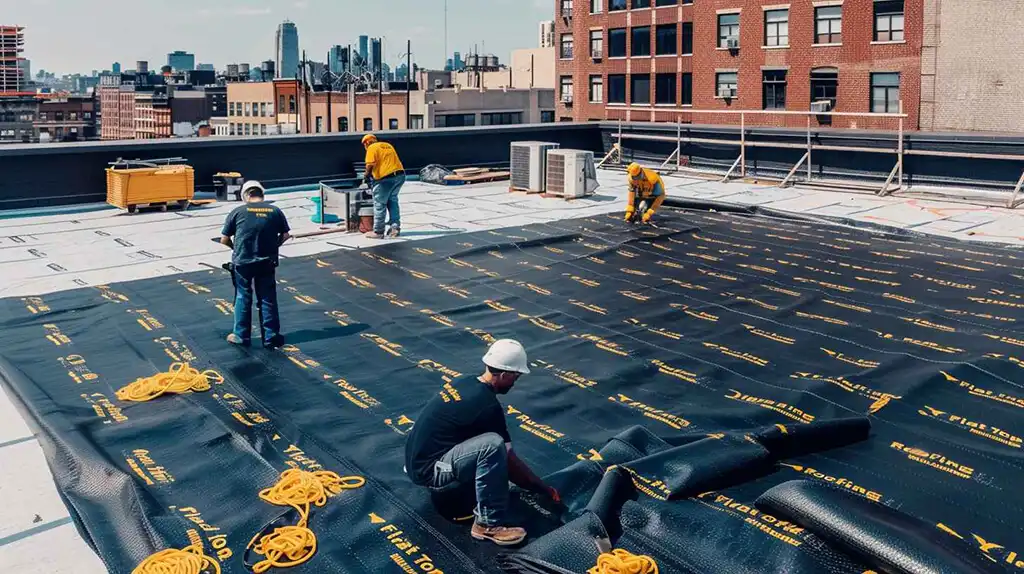
A dead-level roof never drained well and never will until someone puts the pitch back into it. We do that with tapered polyiso, cut on a slope and laid over the deck so the field falls toward the drains at the quarter inch per foot the code asks for. Between two drains, or behind a curb or a wall where water gets trapped, we build crickets and saddles, little ridges of tapered board that split the water and steer it sideways to an outlet instead of letting it pile up in a dead corner. The new membrane goes back over all of it. The roof ends up shedding water on its own, which is the only thing that keeps the surface from cooking in a standing pool every summer.
A roof drain is a small assembly, and any part of it can be the reason the water won't go down. We pull the strainer dome and clear it, check that the clamping ring is tight and the membrane is sealed into it, and reset a drain that's sitting above the field down into a proper sump so water actually falls toward it. A cracked cast-iron bowl or a corroded aluminum one gets swapped. When the leader pipe in the wall is the blockage, we snake it clear and confirm it carries before we close anything up. Done right, the drain sits sealed into the membrane at the low point and pulls water the way it was designed to.
A single drain choked with debris can flood a flat roof faster than you'd expect, and the weight of that trapped water is no small thing on a wide deck. New York's plumbing code is why a roof needs a second way out: an overflow drain or an overflow scupper set a couple of inches above the primary, so when the main outlet clogs the water leaves through the backup before it ever reaches a depth that loads the structure. A lot of older roofs around here never had one, or had it paved over in a recover. We add or restore the secondary drainage as part of the work, because a roof that depends on one clear drain is a roof one storm away from a real problem.

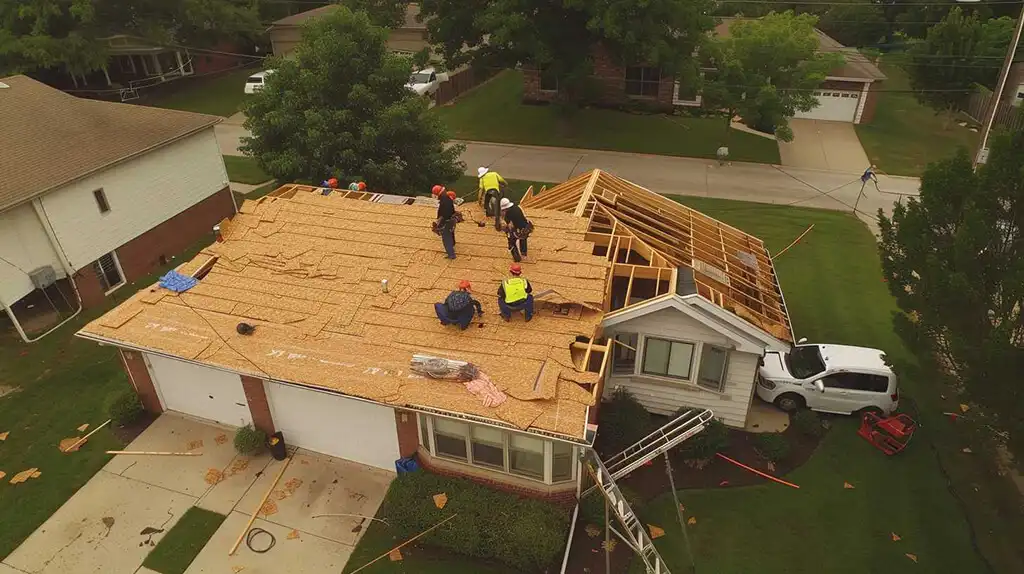
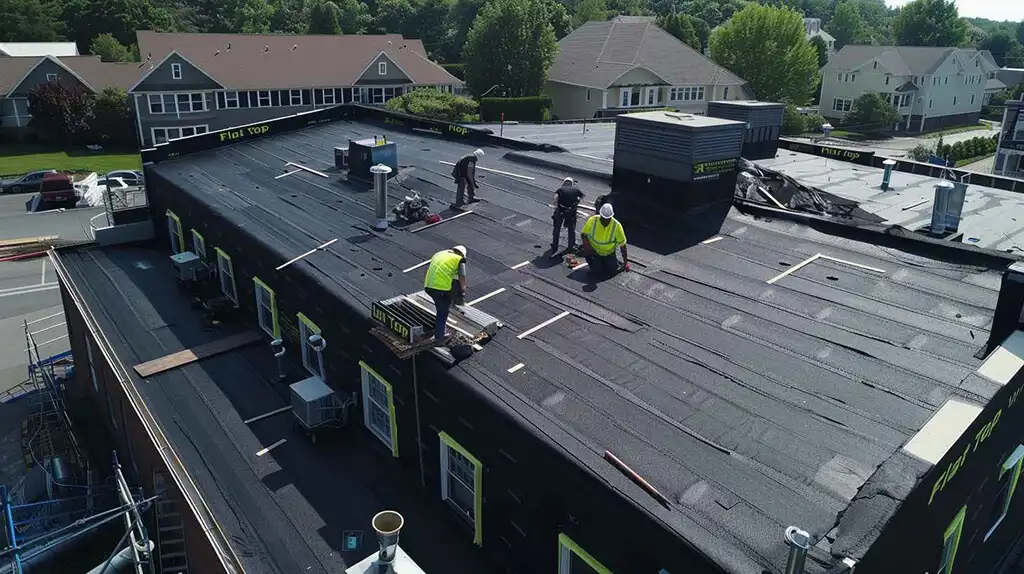
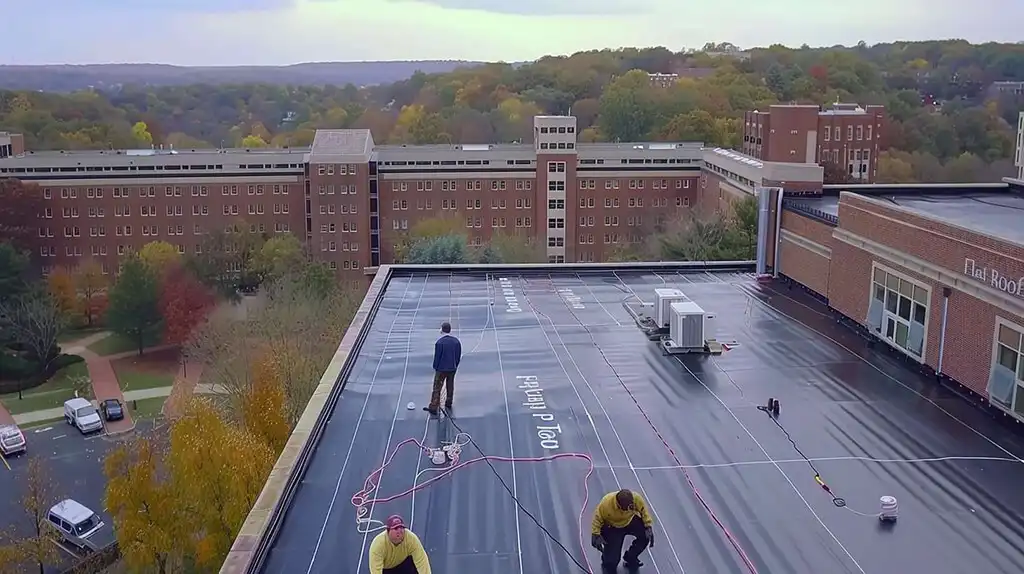
Custom Flat Roof Drainage Design A “flat” roof in Brooklyn is supposed to clear standing water within 24 to 48
Professional Flat Roof Drainage Calculation During a strong Brooklyn summer thunderstorm, a 1,000 square foot flat roof collects more than
Flat Roof Scupper Installation Service A properly sized four-inch scupper can move more than 3,000 gallons of water per hour
Improve Your Flat Roof Water Drainage Picture a July cloudburst in Brooklyn-twenty minutes of downpour that drops 1.2 inches of
Fix Flat Roof Low Spots Permanently Puddles on Your Flat Roof? Here’s How to Fix Low Spots for Good in
Learn to Add Slope to Your Flat Roof The biggest mistake I hear on Brooklyn roofs? Homeowners accepting a contractor’s
Scupper Downspout for Your Flat Roof Last July, a summer thunderstorm hit Park Slope and dropped three inches of rain
Solve Flat Roof Drainage Problems Fast Here’s what most homeowners don’t realize: just one inch of standing water on 1,000
Professional Flat Roof Ponding Repair Professional flat roof ponding repair in Brooklyn typically costs between $875 and $4,200 depending on
Standing Water Flat Roof Problems? Brooklyn’s Expert Solutions Standing water on a flat roof typically causes $2,800-$8,500 in damage over
Tell us where the water sits and how long it stays after the rain stops, plus anything showing on the ceiling below that low spot. A photo of the standing water and the rough size of the roof gets us oriented from the ground.
Up top we find the real low points, not just the obvious one. We check the fall toward every drain, pop the strainer domes and run water to see which leaders actually carry it, and where a puddle won't show on a dry day, we flood the section and mark exactly where it pools.
You get the plan written out: clearing and resetting drains, building crickets and tapered insulation to put the pitch back, adding an outlet or an overflow where the roof needs one, with each piece priced on its own so you can see what's driving the number.
We build the slope and the outlets back the way the roof should have had them, weld or torch any new membrane into the sound roof around it, then pour water across the field and watch it run to the drain before we leave. You'll have the before-and-after shots to keep.