Skylights and Windows

A Skylight Is a Hole in Your Roof - the Curb and Flashing Are What Keep It Dry

Glass, domes, and roof windows let daylight into a flat-roofed building, but every one of them is an opening punched through a surface built to have none. We install, re-flash, and replace skylights on Brooklyn's flat roofs and fuse the curb straight into your EPDM, TPO, or modified bitumen - then water-test it before we leave.

Request Your FREE Roof Estimate!

Or

FlatTop Roofing

Why Does Water Show Up Around a Skylight That's Only a Few Years Old?

A skylight unit rarely fails that fast - the gasket and the dome are good for decades. What lets go early is almost always the curb and the flashing that ties the unit into the roof. On a flat roof the skylight sits on a raised curb, and the membrane has to run up that curb and terminate watertight under the unit's frame. When a window crew or a general contractor sets the skylight and a separate roofer flashes it - or worse, nobody flashes it and they caulk the joint instead - the seam between those two pieces of work is where water gets in. A bead of sealant at the base of a curb is not flashing; it shrinks, cracks, and opens within a few freeze-thaw cycles. Done right, the curb is wrapped in the same membrane as the field of the roof, so there's no joint between two systems for water to find.
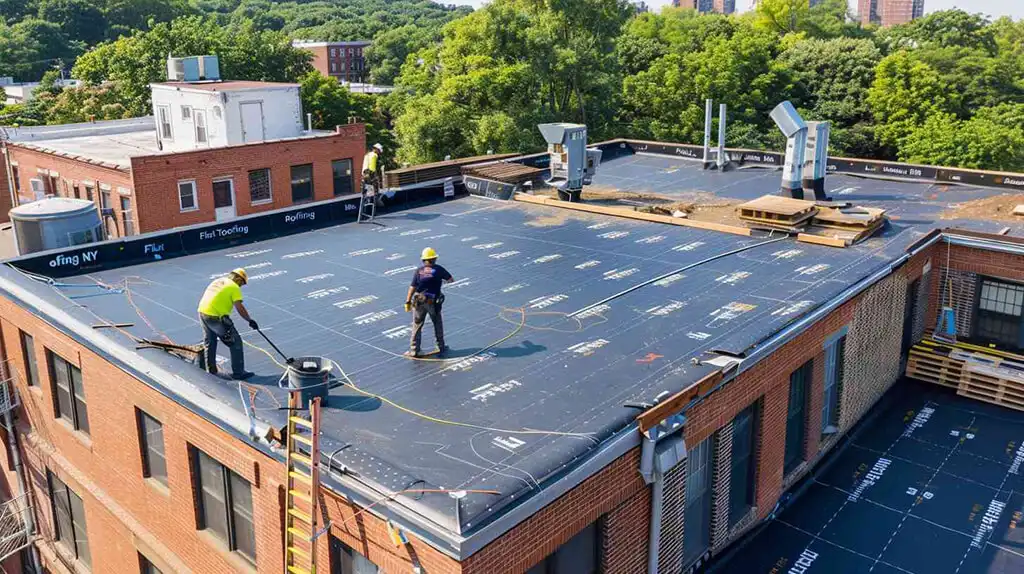
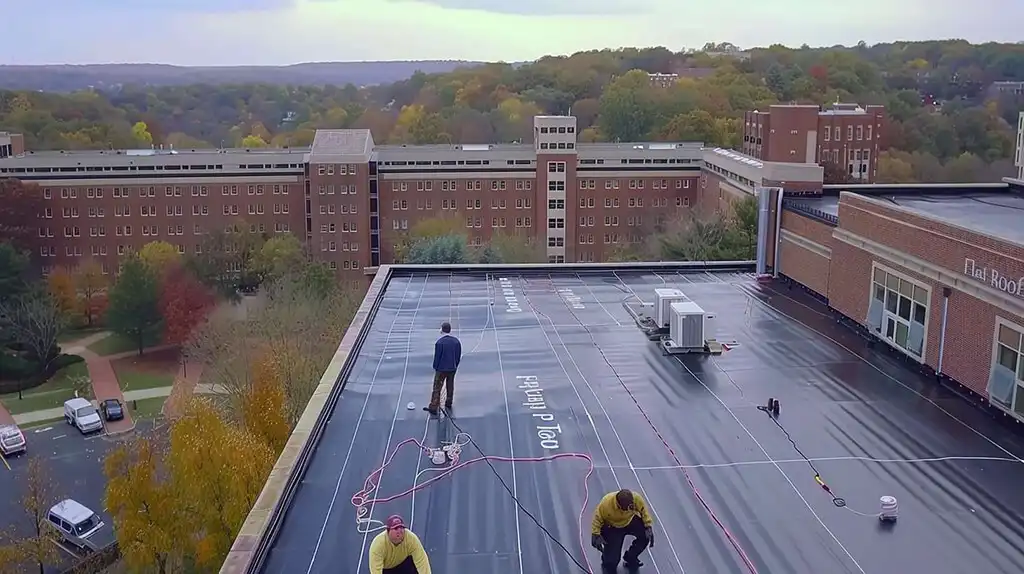
Angle of Flat roofs in Brooklyn NY with roofers

If your roof is still under a manufacturer warranty, the curb has to be flashed to that maker's detail to keep the coverage intact, which is exactly how we do it. We read the deck and the membrane first and tell you what the opening actually involves before any saw comes out.

Can You Add a Skylight to a Flat Roof That's Already There?

Yes, on most decks. The opening gets cut through the deck between the structural members, a wood or metal curb is framed up and fastened, and the unit is set and flashed into the existing membrane so the new curb becomes part of the roof rather than a patch sitting on top of it. The two things that decide whether it's straightforward are the deck and the framing - a steel or concrete deck and a clear bay between joists make for a clean cut, while heavy mechanical work or a structural member running right through the spot complicates it.
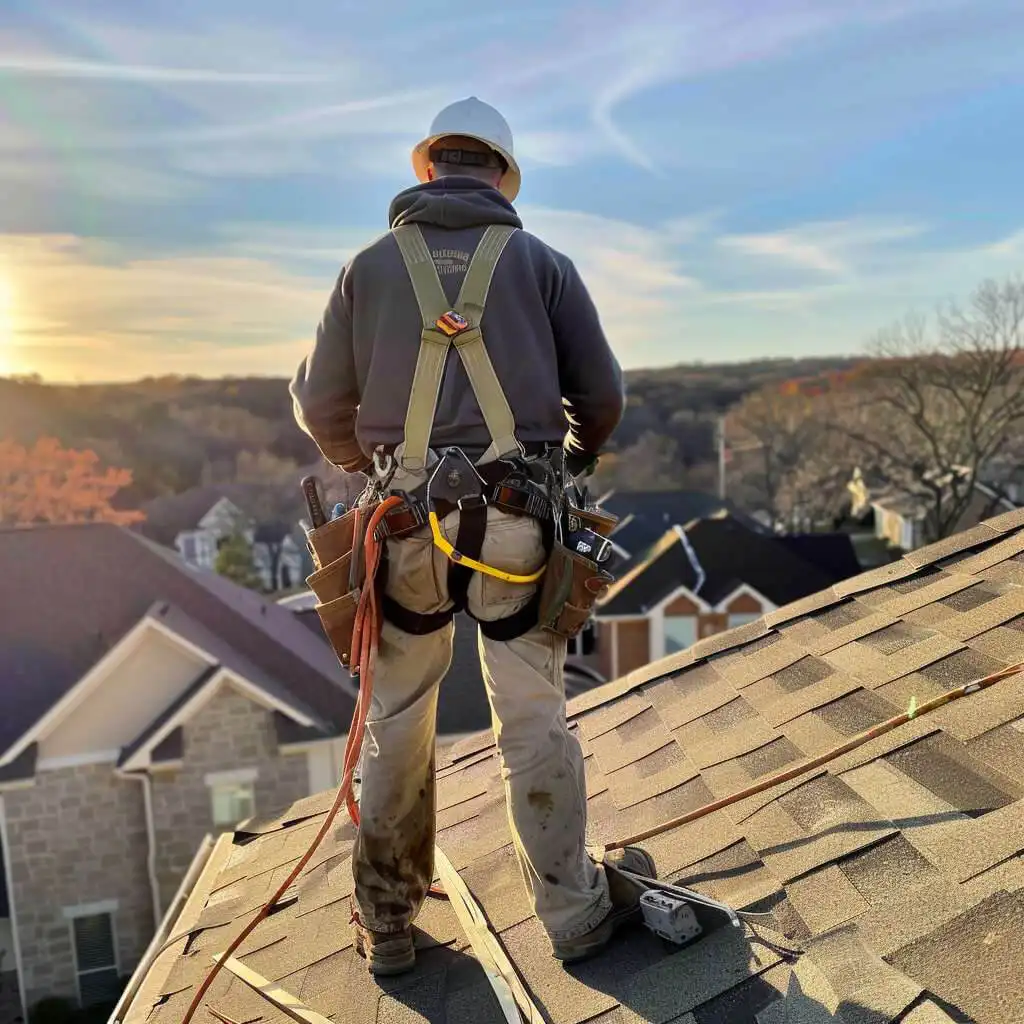
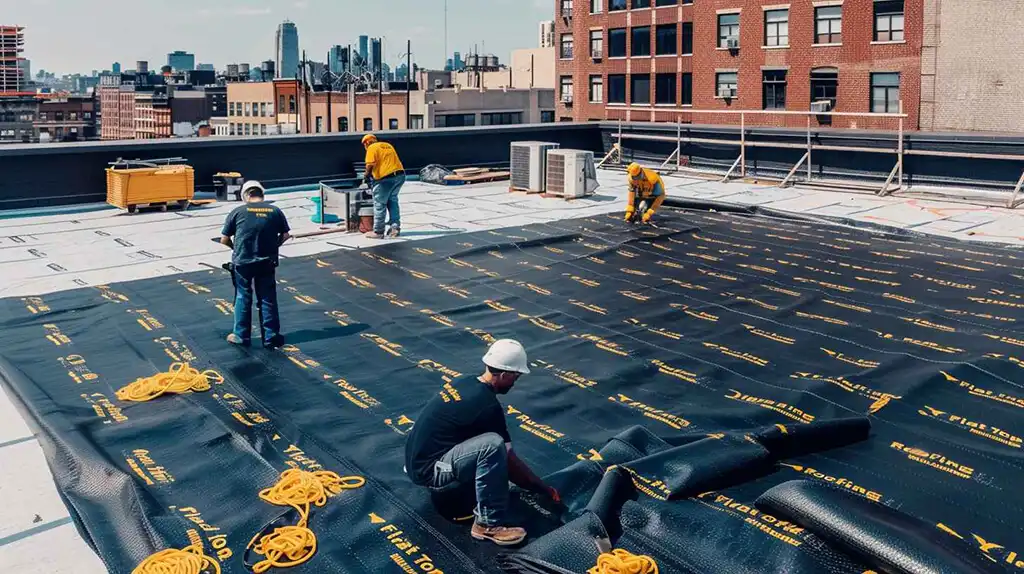
Flat top roofing roofer standing on top a residential home roof
About FlatTop Roofing

A Skylight Is a Roofing Detail Before It's a Window

Most skylight leaks land on our schedule after someone treated the unit like a window instead of a roof penetration. A window installer sets the glass beautifully and walks; a handyman runs caulk around the base and calls it sealed; the roof membrane never gets carried up the curb the way it needs to be. Then the ceiling stains in the next hard rain. Working flat and low-slope roofs across Brooklyn week in and week out - warehouse skylights over loading floors, the domed units over apartment stairwells, glazing on office and restaurant roofs - means we read the curb and the flashing first, because that's the part that's actually failing. The glass is usually fine. Licensed and insured in New York, and certified on the membranes we flash these openings into.

Stopping a Skylight That's Already Leaking

A leaking skylight rarely needs to be torn out. We strip the failed flashing back to sound membrane, rebuild the curb termination, and re-flash the unit in your roof's own EPDM, TPO, or mod-bit so the repair reads as original system. Where the dome gasket or the frame seal has perished, that part gets replaced too - but only after we've confirmed whether the water was coming through the unit or around the curb, because those are two different repairs and the wrong one keeps the ceiling wet.

Setting a New Opening Into the Membrane

Cutting in a new skylight is deck work, framing, and roofing in one job. The opening is cut between the structural members, a curb is built up to the height the flashing detail and the local snow load call for, and the unit - a curb-mounted VELUX, a Wasco or Sunoptics commercial dome, a Bristolite over a larger span - sits on top with the membrane wrapped up and over the curb and terminated under the frame. For a small interior with no roof access for a full unit, a tubular daylight device like a Solatube drops light down a reflective shaft through a flashing far easier to keep dry.

Replacing the Unit Without Replacing the Curb

When an old acrylic dome has gone cloudy and brittle or a fixed unit has fogged between the panes, the glazing is what's spent - the curb underneath is often still solid. We pull the failed unit, check and rebuild the curb flashing while it's exposed, and set a new dome or roof window onto it, matching curb size so the opening doesn't have to be reframed. Venting units, fixed glass, impact-rated domes for a roof that takes hail - the choice comes down to the room below and how the roof gets used.
Our Services

Expert Flat Roofing Services for Every Need

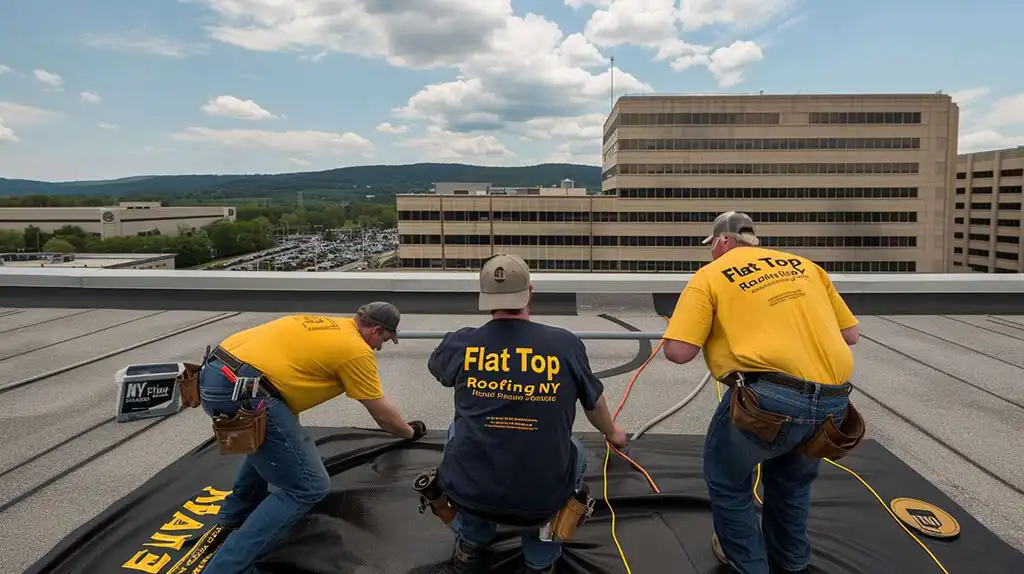
Professional roofers doing Roof Maintenance & Inspection
Cost Guides
A new TPO or EPDM system, a modified-bitumen recover, a coating, or a one-off leak repair sit at very different price points - and the building's size, roof access, drain count, and how much wet insulation has to come off all move the number. Our cost guides walk through what drives each, so you can read a quote and know exactly what you're paying for.
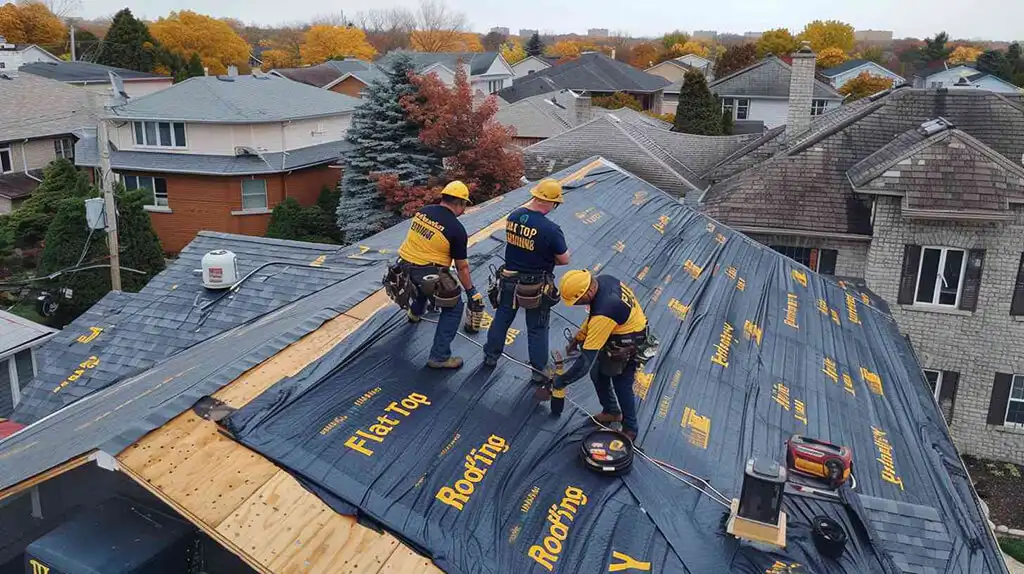
Professional roofers doing flat roof repairs

Leak Repairs

We don't guess at flat-roof leaks. Flood-testing, seam probing, and infrared moisture scanning on larger roofs let us pinpoint where the membrane has opened up and how far the water has spread underneath before we cut into anything.
Professional roofers doing flat roof repairs

Repair Services

Lifting seams, sun-blistered membrane, cracked flashing, failed pitch pockets, separated drain rings - these are the everyday repairs that keep a sound roof watertight. We use the manufacturer's own seam tape, primers, and flashing details so the fix bonds to your existing system instead of fighting it.
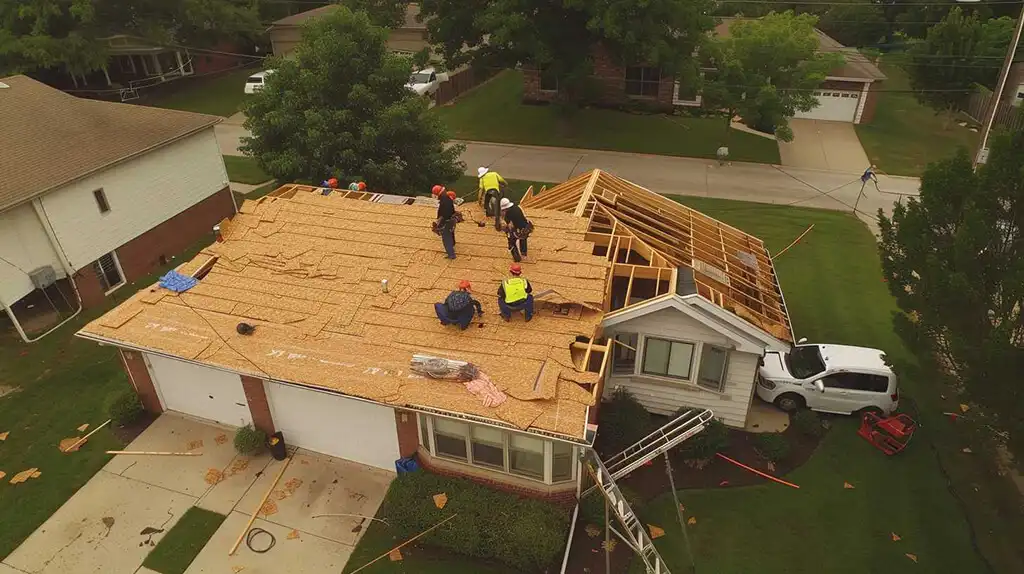
Flat top roofing roofers working on a residential home flat roof

Residential Flat Roofs

Rear roofs on brownstones, rowhouse extensions, and small apartment buildings almost all run flat or low-slope, and they carry their own headaches - tight access, shared parapets, neighbors a few feet away. We repair and replace residential flat roofs with that reality built into the plan.
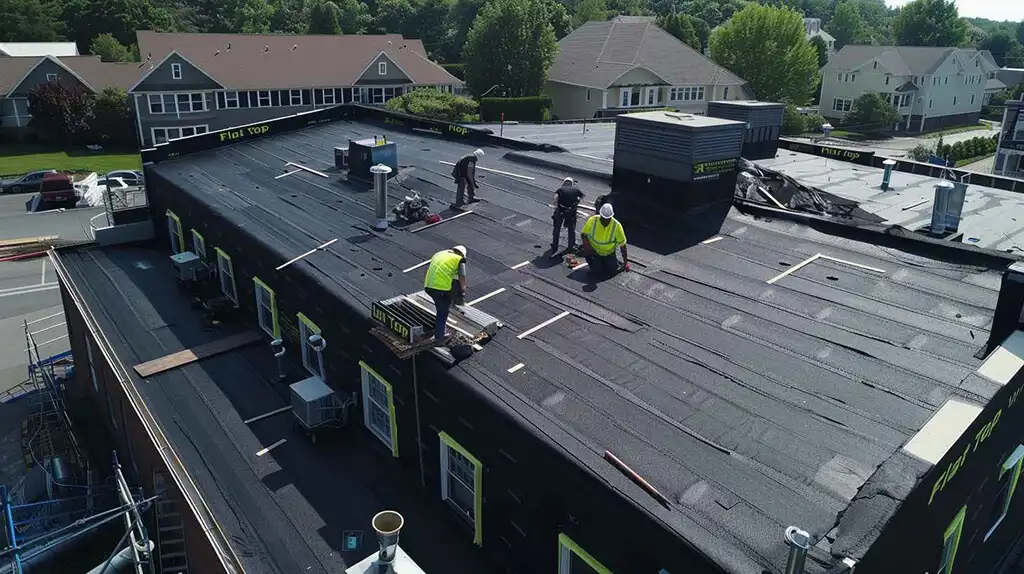
Flat top roofing group of roofers repairing flat roofs

Roof Construction

Tear-off down to a clean deck, fresh insulation and cover board, then the membrane - a fully-adhered EPDM, a mechanically-fastened TPO, or a torched modified-bitumen buildup. New construction and gut rebuilds get the same treatment, spec'd to the structure and the load. When a building wants more from its roof, we also install vegetated green-roof assemblies and the curbs, mounts, and flashing that rooftop solar needs to sit watertight.
Flat top roofing group of roofers doing works on a flat roof

Roof Damage and Problems

Water that never drains, blisters bubbling up under the heat, membrane shrinking and pulling off the parapets, hail bruising, wind-lifted edges - flat roofs fail in specific, recognizable ways, and each one calls for a different fix: re-sloping, re-flashing, a recover, or a full replacement depending on how far it's gone.

A Skylight Gives a Flat Roof Its One Bright Spot and One Extra Place to Leak

The writing here works through the decisions a skylight forces: telling condensation from an actual leak, whether a foggy or cracked dome can be swapped without reframing, what re-flashing a curb properly involves versus the caulk job that failed, and how cutting a new opening changes a roof warranty. Drawn off the skylight curbs we’ve re-flashed and the openings we’ve cut, not a spec sheet.
Categories

Skylight and Roof-Window Questions We Get Asked Most

There's water dripping from my skylight in winter but the roof seems fine - is it leaking?
Often that’s condensation, not a leak. A skylight is a cold surface in a warm, humid room – bathroom or kitchen steam, or just winter indoor air – and moisture condenses on the glass and frame and runs off as drips. A true leak tends to track in after rain or snowmelt and stains the surrounding ceiling; condensation shows up on dry, cold days and stays right at the unit. We can tell which one you’ve got quickly, because the fix is completely different: a leak is a flashing or unit repair, while condensation is a ventilation and sometimes a glazing-upgrade question.
Resealing the surface gasket buys a season at most if the real problem is the curb flashing underneath, so we don’t lead with caulk. If the leak is at the unit’s own seal, that part gets replaced. If it’s at the curb – which is the more common case – we open the flashing, correct the termination, and rebuild it in the roof membrane. The unit itself usually stays in place; pulling and resetting it is only necessary when the curb has to be rebuilt or the deck under it has gone soft.
Not if the curb is flashed to the membrane manufacturer’s published detail, which is the only way we do it. A new penetration done with the maker’s approved flashing materials and method stays inside the warranty; a curb sealed with random hardware-store products is what voids it. If your EPDM or TPO is still under a manufacturer warranty, tell us who made it and we’ll cut and flash the opening so the coverage you already paid for survives the job.
Usually, yes. Acrylic and polycarbonate domes degrade under years of UV while the curb and flashing stay sound, so we can pull the spent dome and set a new one – matched to the existing curb size – without touching the roof around it. While the dome is off is also the moment to check the curb flashing and gasket, so a cloudy-dome swap is a good time to confirm the whole opening is still watertight rather than discovering a curb problem the next storm.
That’s the cheapest time to do it. When the membrane is already open for a tear-off, cutting in a new opening or re-curbing an old skylight folds into the same job, and the flashing ties into the fresh membrane in one pass instead of as a separate trip and a separate patch. On a coating job we re-detail every existing skylight curb before the topcoat goes down anyway, so adding a new dome or swapping a tired unit at the same time avoids paying twice for access and prep.
How it works

From a Stained Ceiling to a Skylight That's Confirmed Dry

Four steps, and the first one settles whether the skylight is even your problem.

Tell us what you're seeing - drips at the frame, a stain spreading from one corner, daylight you'd like to add, or a dome that's clouded over. The symptom and when it shows up point us to the curb, the unit, or the membrane around it before anyone's on a ladder.

On the roof we read the curb flashing, the membrane termination, and the unit's own seal, and water-test the area so we know whether it's the skylight leaking or the roof at the curb. New openings get the deck and framing checked at the same time.

The work comes to you in writing - re-flash, reset, replace the unit, or cut a new opening - with the membrane and curb detail and a price that holds once the job starts. If there's wet board around the curb to cut out and dry, it's in that number, not a surprise later.

We rebuild or set the detail in your roof's own EPDM, TPO, or modified bitumen, flood- or hose-test the finished curb, and send you photos so there's a record the opening is sealed.

Request Your FREE Roof Estimate!

Licensed Brooklyn Contractors Ready to Help

Or