Roof Damage and Problems

Flat Roof Damage Doesn't Fix Itself - and It Rarely Stays in One Spot

Standing water that won't drain, bubbling across the field, seams that have split open, hail bruising you can't see from the ground - flat roofs in Brooklyn fail in a handful of recognizable ways. We identify what's wrong on your EPDM, TPO, or modified bitumen roof, how serious it is, and what it'll take to stop it.

Request Your FREE Roof Estimate!

Or

FlatTop Roofing

Is Standing Water on My Flat Roof Actually a Problem, or Can I Leave It?

Ponding is damage in slow motion. A flat roof is built with a slight pitch so rain runs to the drains; water that's still sitting 48 hours after a storm means the slope or the drainage has failed somewhere. From there it feeds itself - constant moisture speeds up UV and chemical breakdown of the top membrane, anything frozen in a micro-crack pries it wider, and dirt and algae collect in the puddle and hold even more water. The worst part is the load: the standing water's weight deflects the deck a fraction, which deepens the low spot, which then holds a deeper puddle. That loop is why ponding never improves on its own. The fix is almost never a sealant over the puddle - it's correcting the slope with tapered insulation or restoring a drain that's stopped clearing.
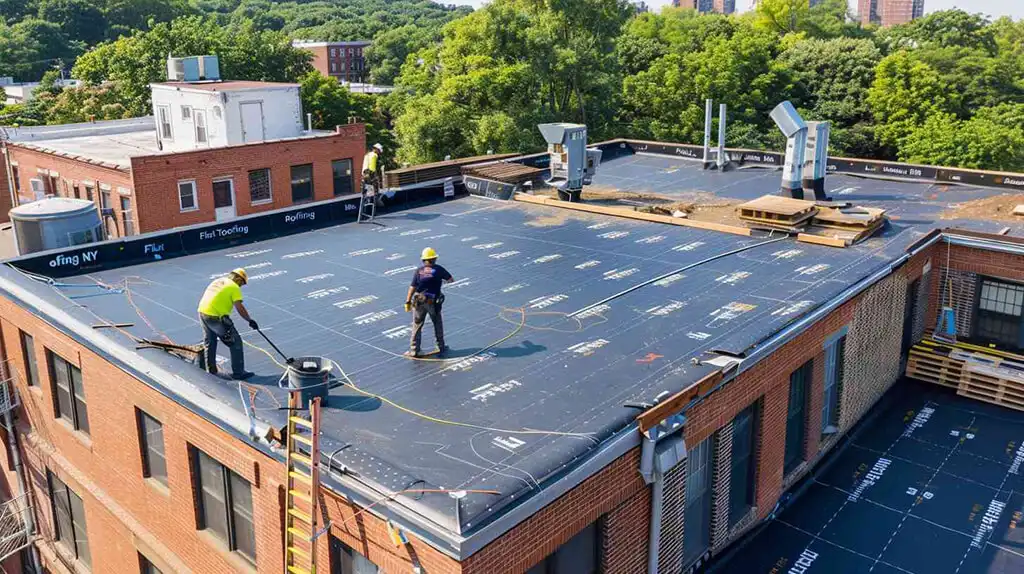
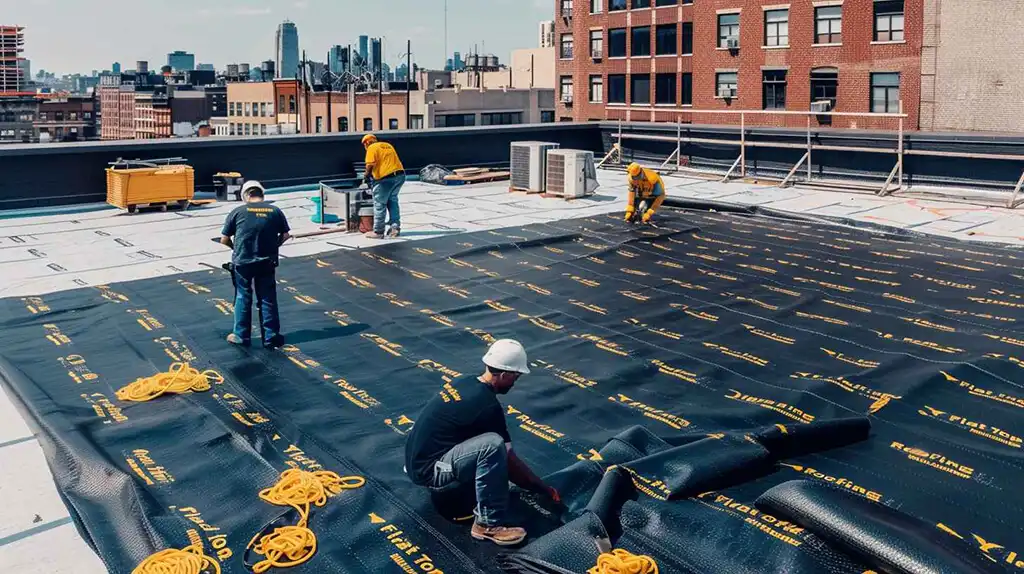
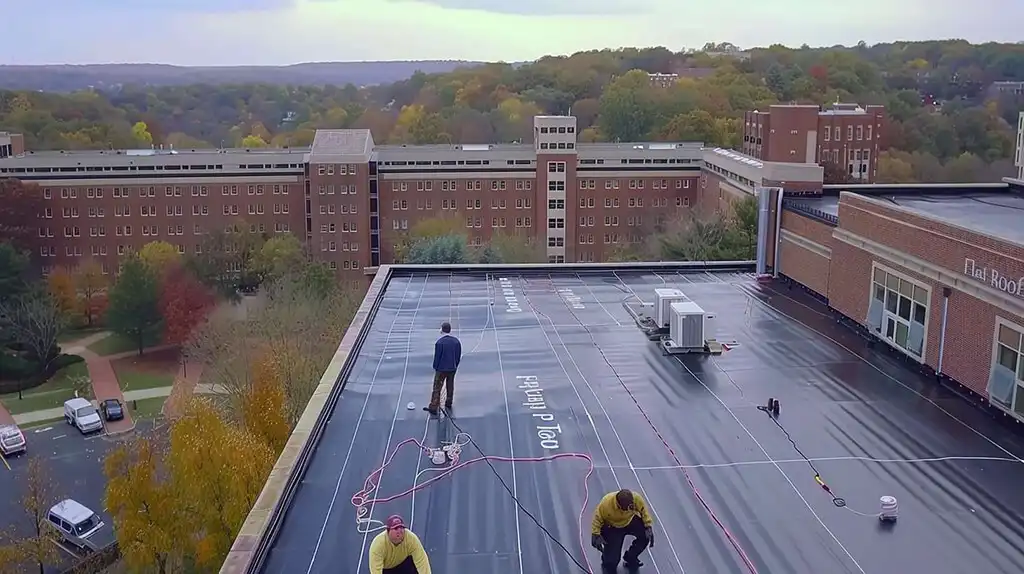
Angle of Flat roofs in Brooklyn NY with roofers

Blisters don't reseal, and each heat cycle grows them, so the longer one sits the more roof it takes with it. The repair is to cut the blister out, dry whatever's underneath, and patch in matching membrane. Stomping it flat or smearing sealant on top does nothing but buy a few weeks.

Those Bubbles Across My Roof - Trapped Air, Water, or Something Failing?

A blister is a pocket where the membrane, or a layer inside it, has lost its bond to what's beneath and trapped air or moisture that swells every time the sun hits it. On EPDM and TPO it's usually a loss of adhesion; on a built-up or modified bitumen roof it's moisture or solvent gassing off between the plies. A few small, intact blisters out in the field aren't an emergency - but ones that have cracked open, or that cluster along a seam, are an opening waiting to leak.
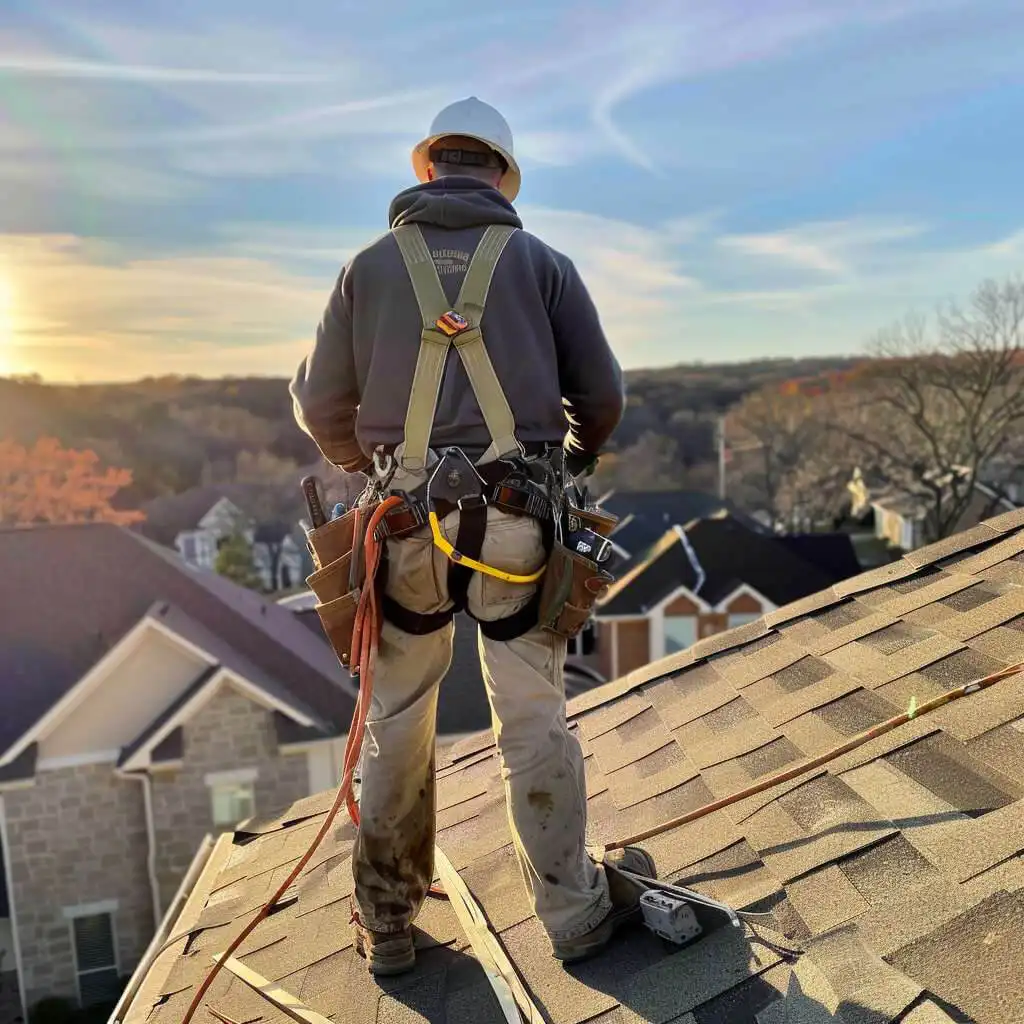
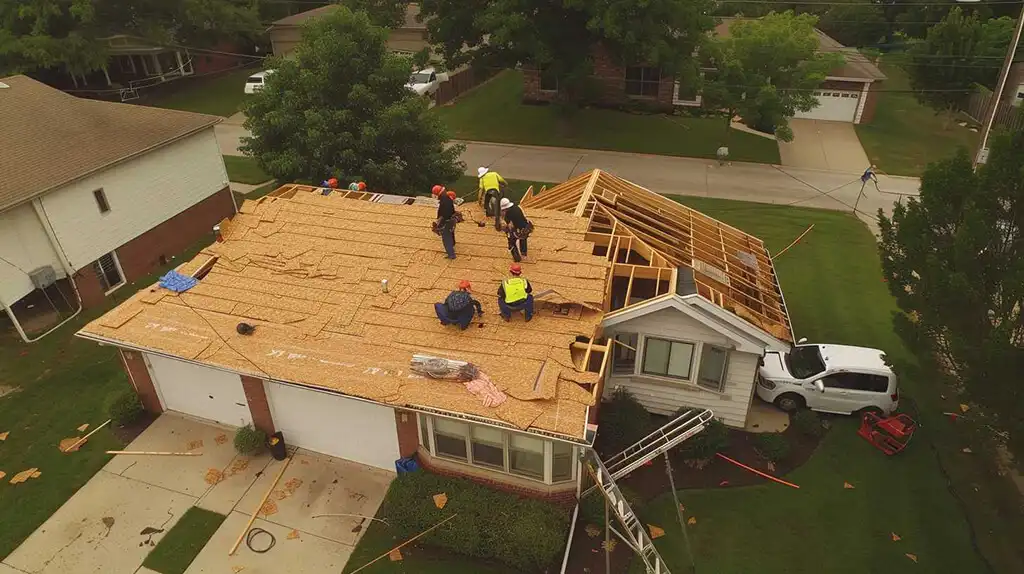
Flat top roofing roofer standing on top a residential home roof
About FlatTop Roofing

Some of These Problems Can Wait. Others Are Already Spreading.

A damage call usually starts with an owner who can see something's off but can't tell how bad it is - a dark ring on the ceiling, a soft area underfoot, a bubble that wasn't there last year. The first thing we settle is urgent versus cosmetic. A chalky EPDM surface or a thin scatter of field blisters can hold another season; a split seam over an occupied floor or wet board creeping under the membrane cannot. FlatTop spends every week on flat and low-slope roofs around Brooklyn - warehouse decks, apartment and office buildings, restaurant roofs with grease-baked curbs - so these failure patterns are recognizable the moment we're up there, and you'll know which category yours is in before anything gets quoted.

When the Membrane Starts Pulling Away From the Edges

EPDM in particular shrinks as it ages - the sheet tightens over years of heat cycling and starts dragging at its own laps and at the flashing where it turns up a parapet or a curb. You'll see the seams stretched thin, the corners lifting, sometimes the rubber pulled back off a wall by half an inch. That tension is what opens the next seam, so caught early it's a re-flashing and re-securing job around the perimeter. Left to run, it peels and the next windstorm finishes the job.

A Roof Surface That's Cracking, Chalking, or Going Bald

Every membrane wears from the top down. A modified bitumen cap sheds its surface granules and the asphalt underneath starts to check in a fine, dried-out pattern. EPDM chalks and thins. A TPO top ply weathers until you can see the reinforcing scrim through it. None of this leaks the day you spot it, but it's the roof telling you how much service life is left - and it's the line between a membrane that can still take a protective silicone or acrylic coating and one that's already past saving.

Wind and Hail Damage You Won't See From the Sidewalk

A storm rarely tears a flat roof open all at once. Wind gets under a loose edge or a flashing termination and works it back over the next few blows; hail bruises the membrane in spots that don't crack until the following freeze; a hard gust shoves a rooftop unit on its curb and breaks the seal around it. The damage hides on the surface and tends to surface inside weeks later. After a bad blow it's worth a look from up top, and if it turns out to be storm damage, we photograph and write it up in the form an adjuster needs.
Our Services

Expert Flat Roofing Services for Every Need

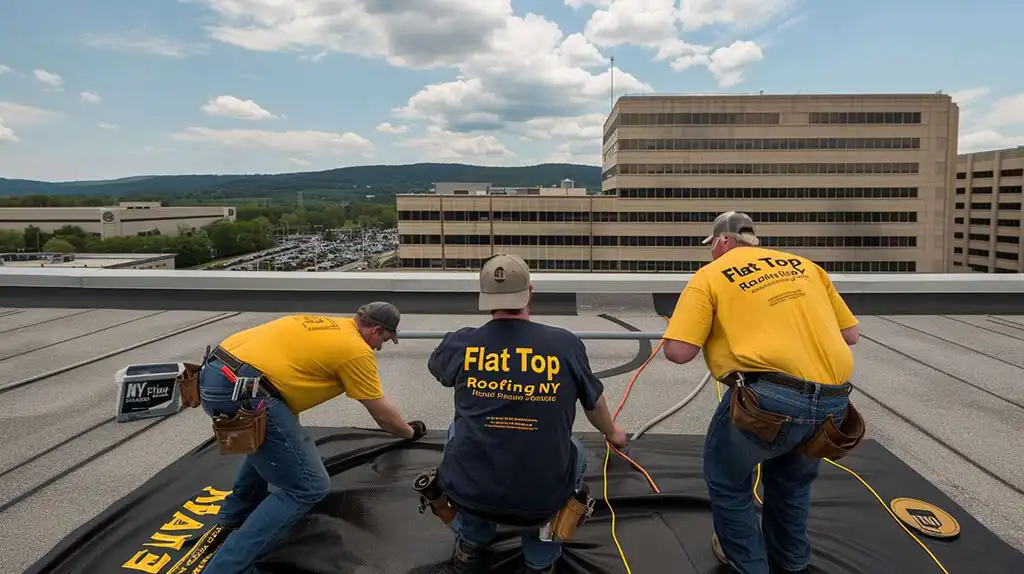
Professional roofers doing Roof Maintenance & Inspection
Cost Guides
A new TPO or EPDM system, a modified-bitumen recover, a coating, or a one-off leak repair sit at very different price points - and the building's size, roof access, drain count, and how much wet insulation has to come off all move the number. Our cost guides walk through what drives each, so you can read a quote and know exactly what you're paying for.
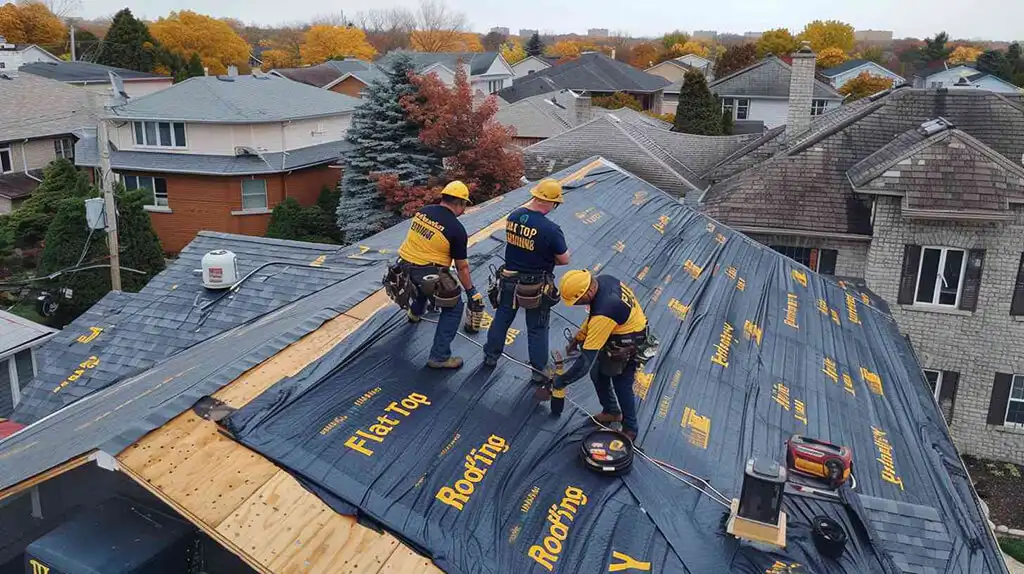
Professional roofers doing flat roof repairs

Leak Repairs

We don't guess at flat-roof leaks. Flood-testing, seam probing, and infrared moisture scanning on larger roofs let us pinpoint where the membrane has opened up and how far the water has spread underneath before we cut into anything.
Professional roofers doing flat roof repairs

Repair Services

Lifting seams, sun-blistered membrane, cracked flashing, failed pitch pockets, separated drain rings - these are the everyday repairs that keep a sound roof watertight. We use the manufacturer's own seam tape, primers, and flashing details so the fix bonds to your existing system instead of fighting it.
Flat top roofing roofers working on a residential home flat roof

Residential Flat Roofs

Rear roofs on brownstones, rowhouse extensions, and small apartment buildings almost all run flat or low-slope, and they carry their own headaches - tight access, shared parapets, neighbors a few feet away. We repair and replace residential flat roofs with that reality built into the plan.
Flat top roofing group of roofers repairing flat roofs

Roof Construction

Tear-off down to a clean deck, fresh insulation and cover board, then the membrane - a fully-adhered EPDM, a mechanically-fastened TPO, or a torched modified-bitumen buildup. New construction and gut rebuilds get the same treatment, spec'd to the structure and the load. When a building wants more from its roof, we also install vegetated green-roof assemblies and the curbs, mounts, and flashing that rooftop solar needs to sit watertight.
Flat top roofing group of roofers doing works on a flat roof

Roof Damage and Problems

Water that never drains, blisters bubbling up under the heat, membrane shrinking and pulling off the parapets, hail bruising, wind-lifted edges - flat roofs fail in specific, recognizable ways, and each one calls for a different fix: re-sloping, re-flashing, a recover, or a full replacement depending on how far it's gone.

Putting a Name to What's Going Wrong Up There

The guides here walk through the problems that bring owners to this page – why water won’t leave a roof, what blistering and surface cracking are actually telling you, how to separate storm damage from plain age, and when a problem is still a repair versus past the point of one. Every one comes off a real Brooklyn roof we’ve stood on, not a content mill.
Categories

Questions Owners Ask When Something's Wrong Up Top

Can a flat roof be damaged before it ever leaks inside?
Yes, and usually it is. The damage starts on the surface – a seam under tension, a blister, granules washing off, water sitting where it shouldn’t – well before any of it finds a path down to your ceiling. By the time a stain shows inside, the problem up top has often been working for months. That gap is exactly why a roof that “isn’t leaking” can still be in real trouble, and why a look after a hard winter or a storm earns its keep even with a dry ceiling.
It comes down to two things: whether water can get in, and whether the damage spreads on its own. Surface chalking, a few intact blisters, light granule loss – that’s aging, and it can wait for a planned coating or replacement. A split seam, flashing pulled off a curb, wet board under the membrane, or ponding that keeps deepening will get worse every week and worse over every freeze. We grade each item while we’re up there so you’re not guessing at the priority.
They’re behind a lot of the damage we find. Service crews walking the same route wear a track into the membrane; a unit dripping condensate keeps one spot wet all year; restaurant grease exhaust slowly eats the membrane around the hood; a heavy rooftop unit shifts and stresses the curb flashing. Roofs that carry equipment need walk pads and the penetrations checked on a schedule, because that’s where the wear concentrates.
Drainage, by a wide margin. A lot of these roofs sit nearly dead level, the drains clog with leaves and grit, and water ends up standing for days. Almost every other failure – blistering, splitting seams, a deck that’s started to sag – runs faster on a roof that ponds. Get the water moving off and you slow down half the other problems with it.
Rarely. A localized failure – a bad seam, a patch of wet board, storm damage in one corner – gets cut back to solid material and bonded into the good membrane around it. A full replacement is only on the table when the damage has spread wide: insulation soaked across a large area, the deck gone soft, or a membrane so weathered it won’t hold a patch. We’ll show you what we found and where that line falls, instead of quoting a tear-off by reflex.
How it works

How We Sort Out What's Actually Wrong

A damage call ends with a verdict, and that verdict isn't always a repair - sometimes the answer is a coating, sometimes it's watching a spot, sometimes it's one section rebuilt while the rest stays. Here's how we get there.

Tell us what you're seeing and when it started - water standing after rain, a bubble or crack on the surface, a soft area underfoot, a stain that showed up inside. The symptom and the timing narrow it down before anyone's on a ladder.

We walk the whole roof, not just the spot you flagged, reading the seams, flashing, drains, the open field, and the deck wherever it's visible. An infrared scan or a few test cuts show how far any wet area has crept underneath.

You get it in writing: every problem we turned up, how serious each one is, and whether it's a repair, a coating, or a section that's finished - with a price beside each so you can decide what to take on and what to hold.

Whatever you green-light, we do in your roof's own system - Carlisle, GAF, Firestone, Mule-Hide, whatever EPDM, TPO, or mod-bit is already up there - and document the work before and after, so you've got a record for your files or an insurer.

Request Your FREE Roof Estimate!

Licensed Brooklyn Contractors Ready to Help

Or