
Build Residential Flat Roofs Today
Build Residential Flat Roofs Today A modern residential flat roof isn’t “black rubber over plywood”-it’s
(929) 702-2949
Seams and flashing give out before the field of the membrane does. The weak spots are the transitions - where the roof meets a parapet, wraps a drain, or seals around a pipe or rooftop unit. Standing water sits on those joints and works through, which is why drainage problems and leaks usually show up together.
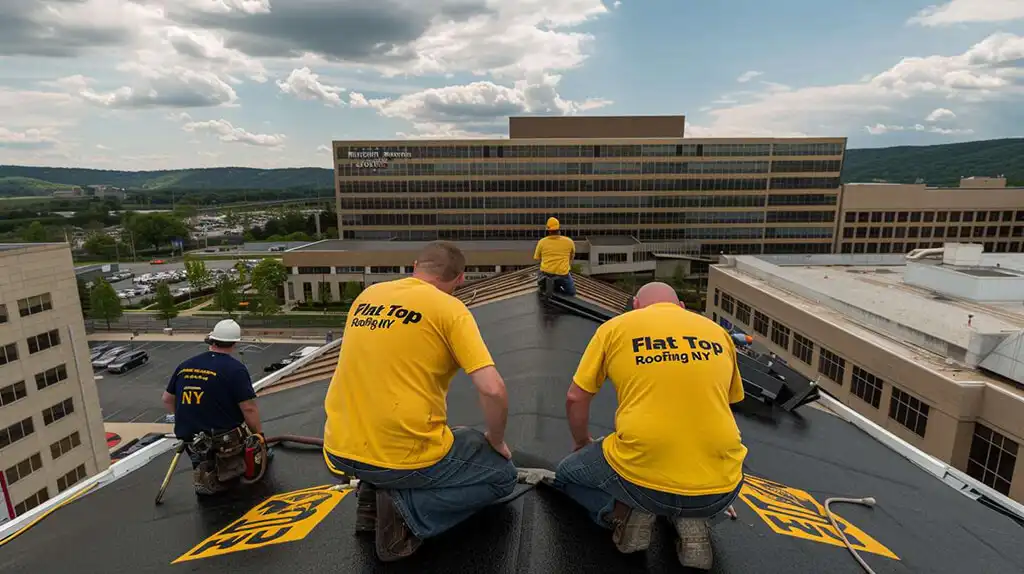
Timing is what separates a cheap fix from an expensive one. Catch a lifting seam or cracked flashing early and it's a small repair; let it run a season and water gets into the insulation and decking, which turns a patch into a tear-off.
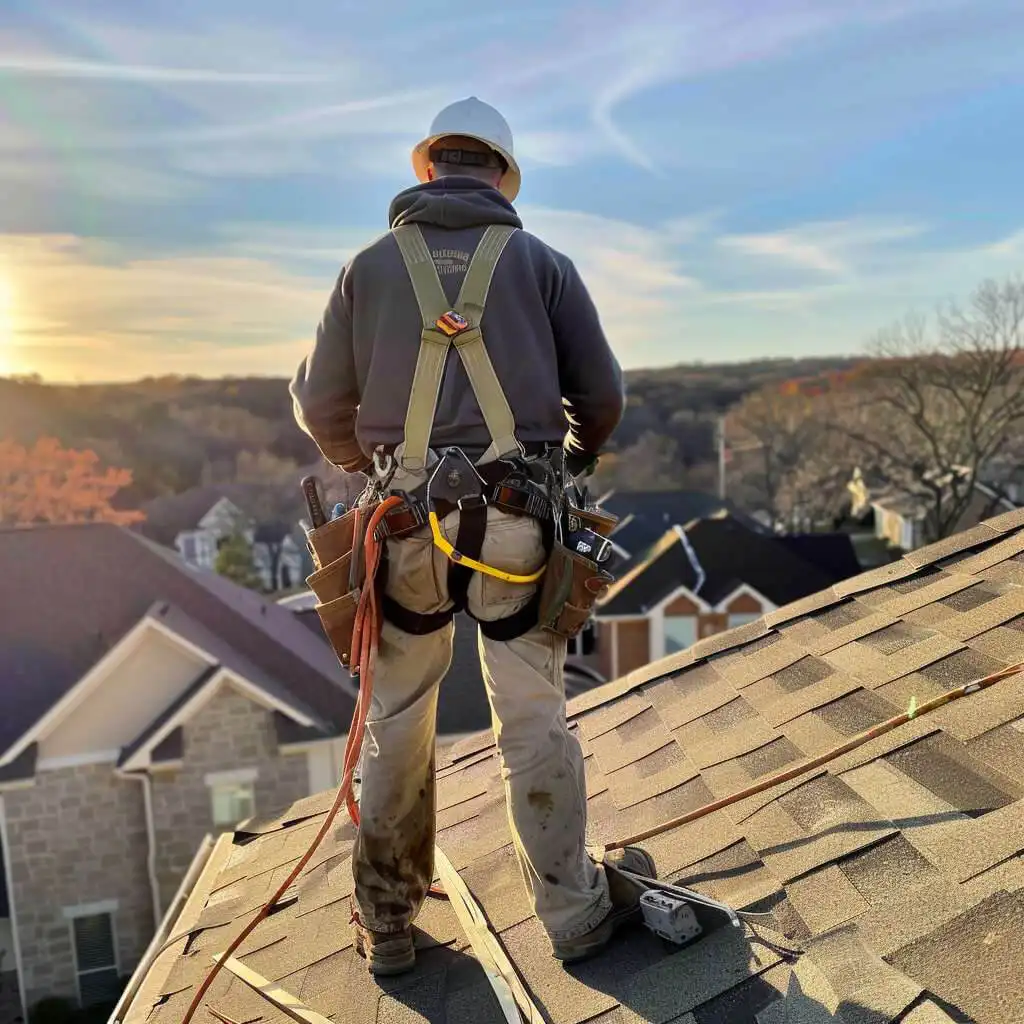
FlatTop Roofing works on flat and low-slope roofs and nothing else. The focus is the whole point - a crew that runs EPDM, TPO, and modified bitumen every week knows the failure patterns, the flashing details, and the drainage quirks that a general roofing outfit only meets occasionally. We're licensed and insured, we pull permits when a job calls for them, and we back our installs with the manufacturer warranties our certifications let us register.
No shingles, no slate, no nudging you toward a trade we don't live in. Every job we take is a flat or low-slope system, which means the crew on your roof has done your exact roof many times over.
We're trained and approved installers for the membranes we put down, so we can register manufacturer warranties - including no-dollar-limit coverage on qualifying commercial systems - rather than just a contractor's verbal promise.
The estimate is free and so is the diagnosis. We go up, read the membrane, seams, drains, and flashing, and tell you whether you're looking at a repair, a coating, or a full replacement - with the scope written out so you can hold it up against anyone else's bid.
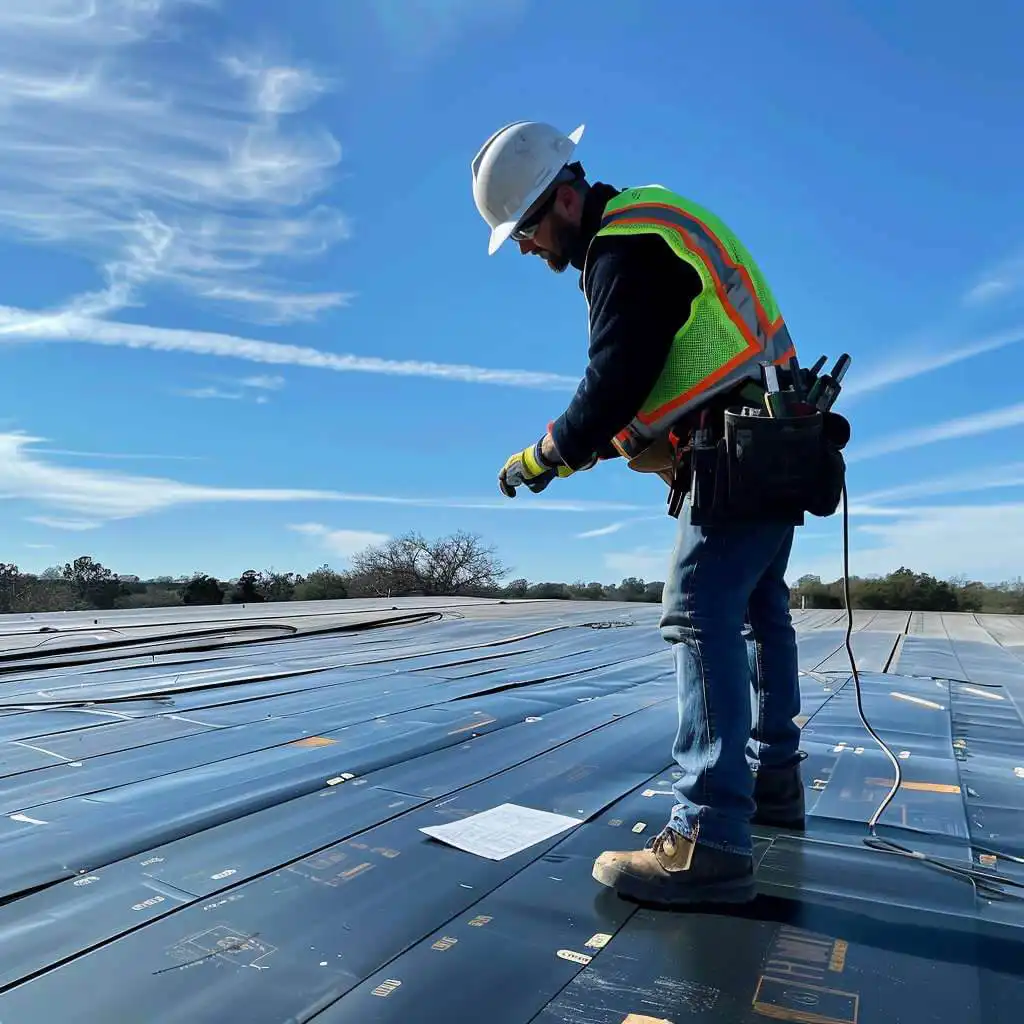
We come out and inspect - membrane, seams, drains, flashing, and the deck condition wherever we can read it.
You get a written scope and price, with the membrane and prep spelled out line by line.
The work happens: tear-off and disposal if it's needed, then the new system or the repair goes down.
We walk the finished roof with you, register any warranty, and send photos of what was done.
(929) 702-2949
Plenty of crews can lay a membrane. Here's what tends to bring property owners and building managers back the next time.
A roof that ponds keeps failing no matter how clean the patch is, so we fix the drainage itself - re-sloping with tapered insulation, clearing or adding drains and scuppers - instead of sealing over the problem.
Straight answers on repair versus replacement. A silicone or acrylic coating can add five to ten good years to a sound roof; on a saturated deck it just locks the moisture in. We'll tell you which situation you're actually in.
Commercial work is scheduled around your operation. Restaurants, warehouses, and office buildings stay open while we phase the job so nobody loses a day.
Permits and the DOB paperwork are handled on the jobs that require them, so a project doesn't stall waiting on an inspection.
Old membrane and wet insulation get hauled off the same day - the deck never sits open overnight and your lot doesn't fill with debris.
The crew that quotes your roof is the crew that installs it. No subcontractor handoff, no guessing about who's actually showing up.
A split seam, a drain that backed up after a storm, or snow load piling up faster than the roof can shed it can put water inside your building in a matter of hours. Our emergency line is staffed around the clock - we'll get a temporary dry-in over the breach fast, then return for the permanent repair once we can read the full picture in daylight.
Everything we do lives on flat and low-slope roofs, from a single seam repair to a full tear-off and new system. The deeper guides break each one down further.
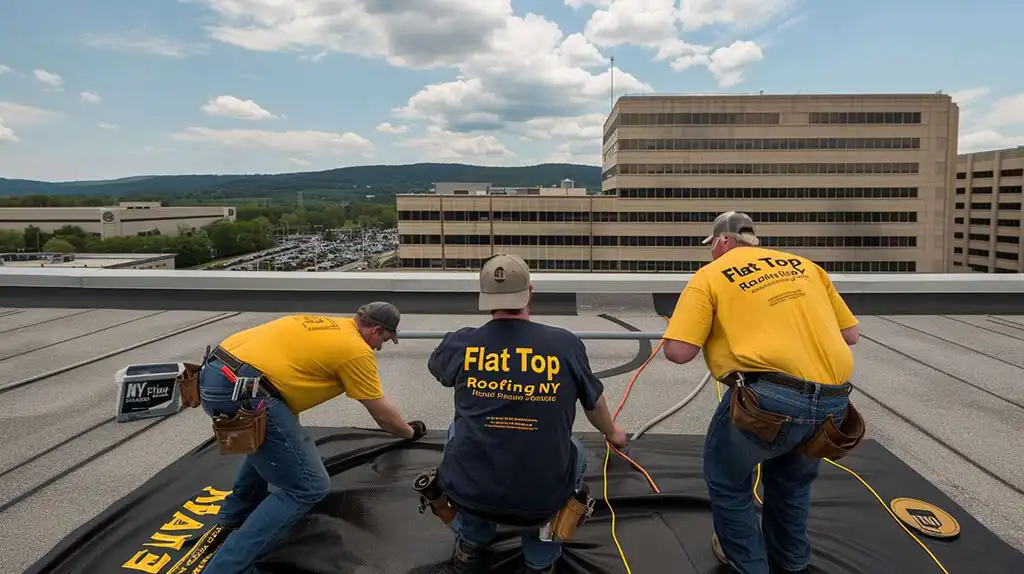
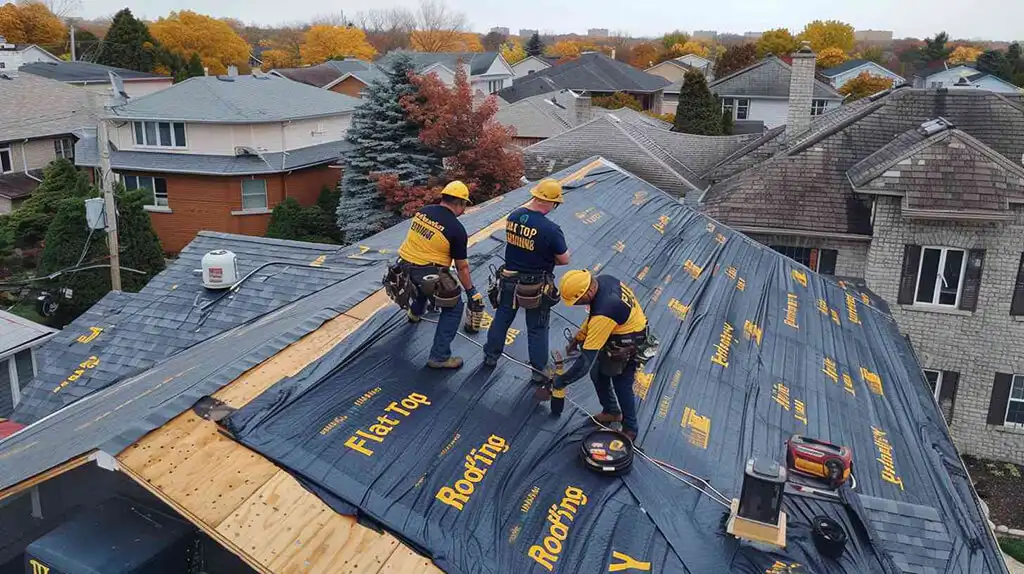
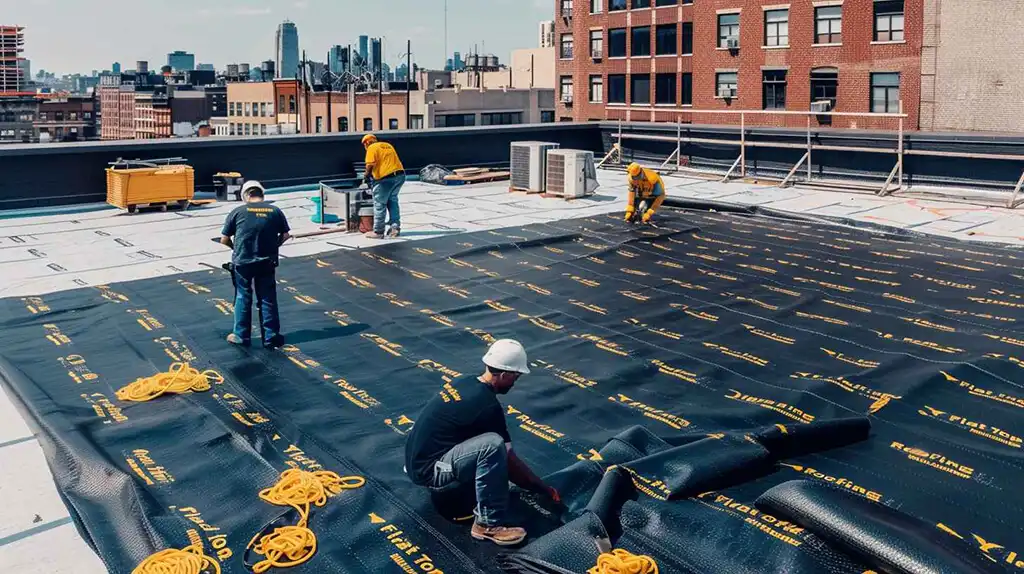
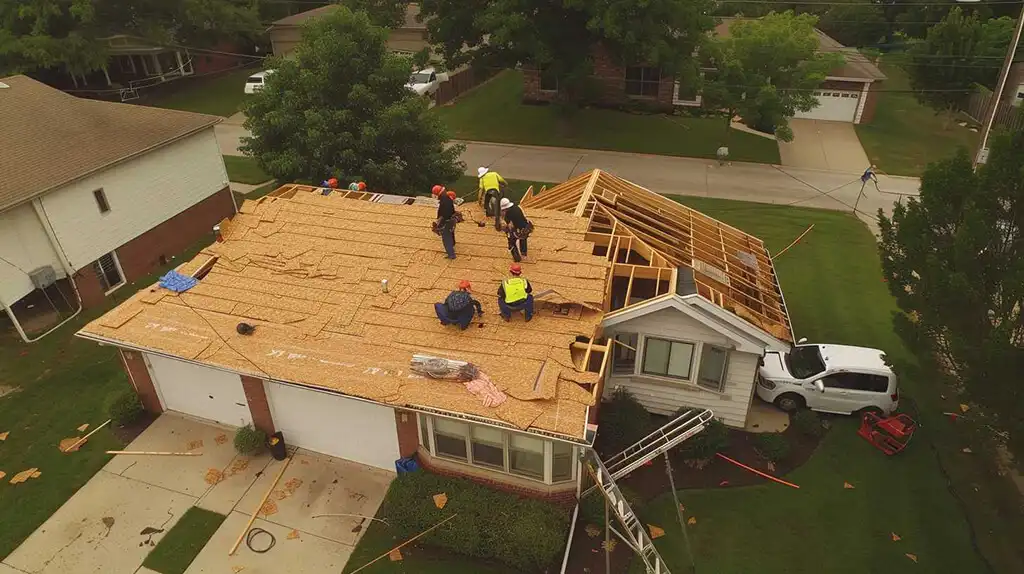
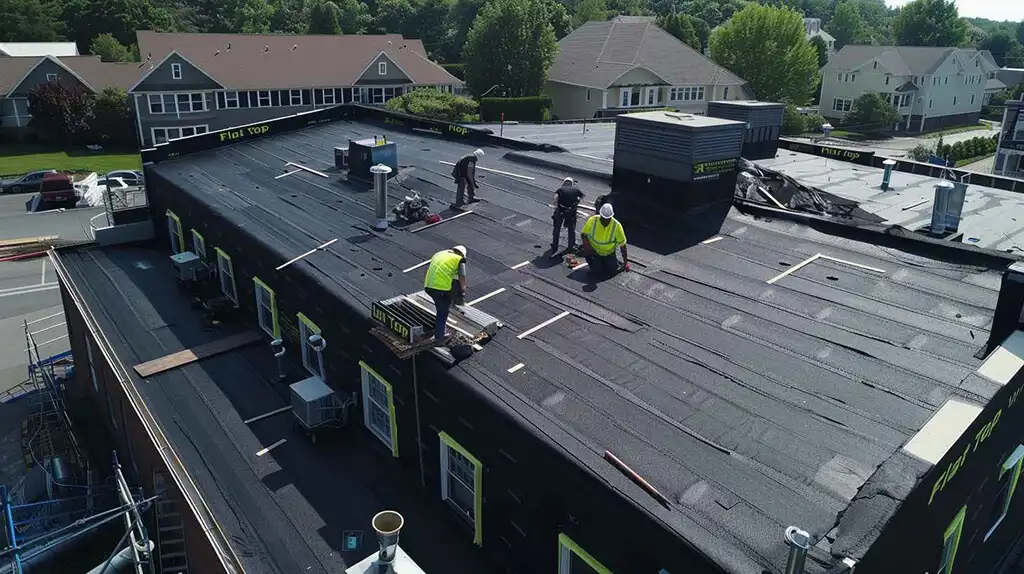
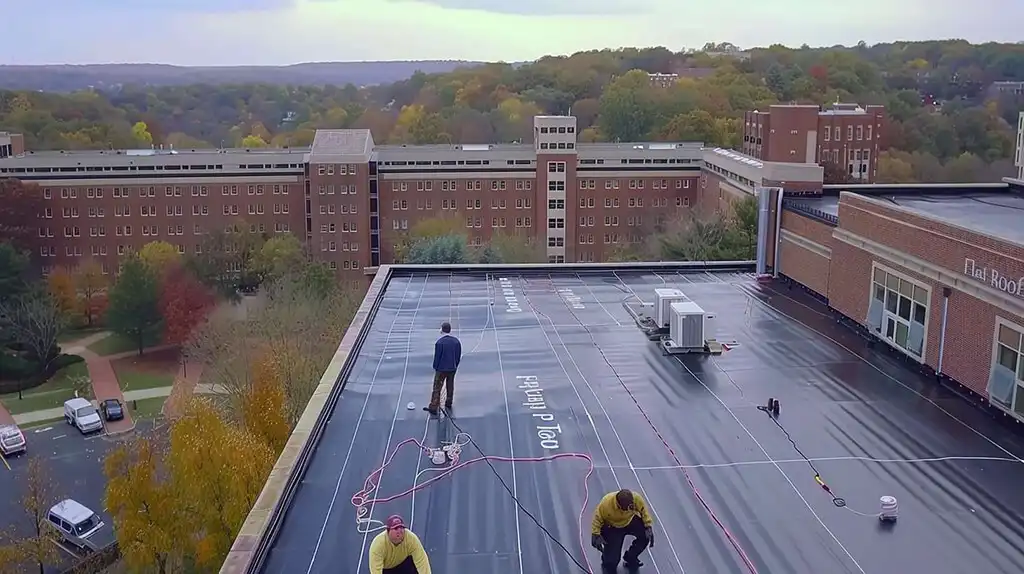
We write the things property managers and owners are already searching for - how to tell a coating-worthy roof from a tear-off, what a fair flat-roof quote should include, why your drains matter more than your membrane, and what a Brooklyn winter does to a low-slope system. Plain explanations from people who spend their days on these roofs.
Build Residential Flat Roofs Today A modern residential flat roof isn’t “black rubber over plywood”-it’s
Beat Summer Heat on Your Flat Roof On a 92°F July afternoon in Brooklyn, your
Cold Flat Roof Construction Service A badly built cold flat roof can dump 30-40 liters
Know the Right Time to Replace Flat Roof Most Brooklyn homeowners only think about replacing
Expert Flat Roof Coating Contractors A good flat roof coating can cut heat, extend roof
Trusted Flat Roof Replacement Contractors In Brooklyn, a real flat roof replacement by a licensed
Custom Flat Roof Drainage Design A “flat” roof in Brooklyn is supposed to clear standing
Calculate Timber for Flat Roofs Here’s something most online “flat roof timber calculators” won’t tell