Roof Replacement

A Full Tear-Off and New System for Flat Roofs That Are Genuinely Past Saving

New EPDM, TPO, and modified bitumen for Brooklyn warehouses, apartment buildings, restaurants, and rowhouse roofs that have run out of service life - and a straight read first on whether yours is actually finished or still has a few seasons left in it.

Request Your FREE Roof Estimate!

Or

FlatTop Roofing

How Do I Know the Roof Needs Replacing and Isn't Just Due for Another Patch?

A single failed seam or one soft spot is a repair every time. Replacement is the answer when the membrane has given out everywhere at once - the field gone brittle and checked end to end, seam after seam lifting, the surface thinned to where a patch has nothing solid to bond into. Age frames it: rubber past 25 or 30 years, a modified-bitumen cap that's lost its granules across the whole deck, a TPO top layer weathered through out in the open field, not just at the edges. The plainest signal is your own ledger - if a crew's been up there every season and the next leak just opens a few feet from the last one, you're already spending replacement money, only in pieces, with no new roof to show for it. We pull cores and run a moisture scan before we put it that way, so the verdict rests on what the membrane and the wet insulation are doing, not the calendar by itself.
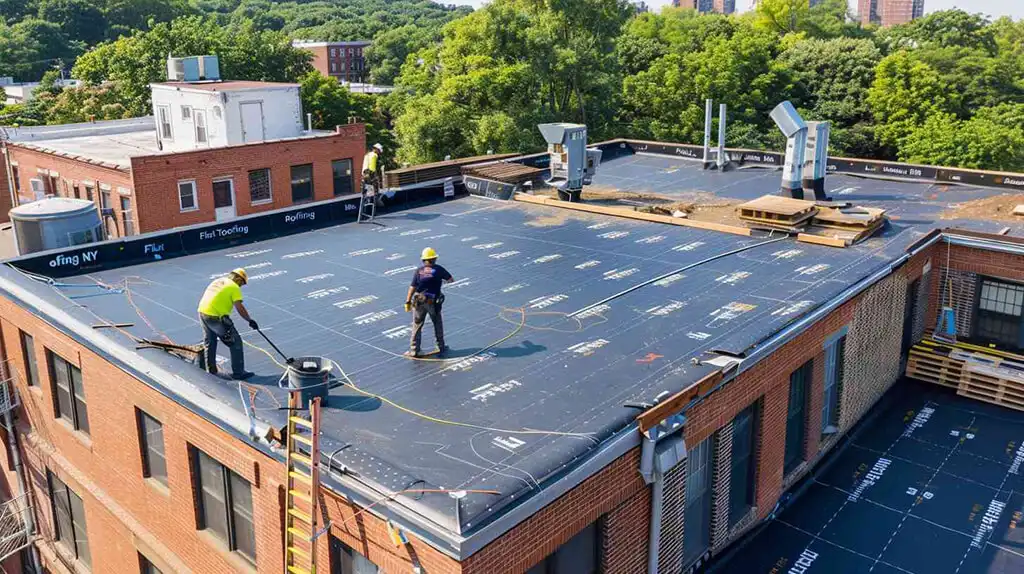
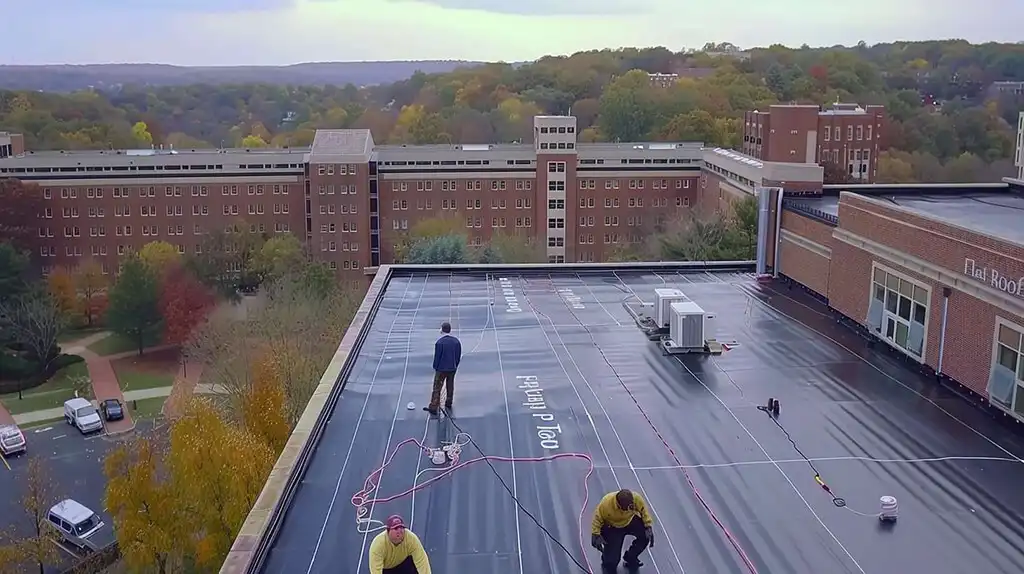
Angle of Flat roofs in Brooklyn NY with roofers

A replacement quote should account for that rather than assume a perfect deck. We price the tear-off and the new system against sound decking, then name a per-square-foot rate for any section that has to be cut out and rebuilt once it's exposed. You see the bad areas before they're covered - photographed and measured, added as a line you already knew about instead of a surprise on the final invoice.

When You Strip the Old Roof Off, What If the Deck Underneath Has Rotted?

Pulling the membrane and insulation is the only moment anyone gets a true look at the deck, and on a roof that's leaked for years, part of it is usually gone - steel rusted thin at the low spots, wood plank turned punky where water stood, a concrete or gypsum deck spalling under a chronic leak. Decking that's lost its hold on a fastener can't carry a new roof, so replacing it isn't optional; the only question is whether you hear the number in advance or after the fact.
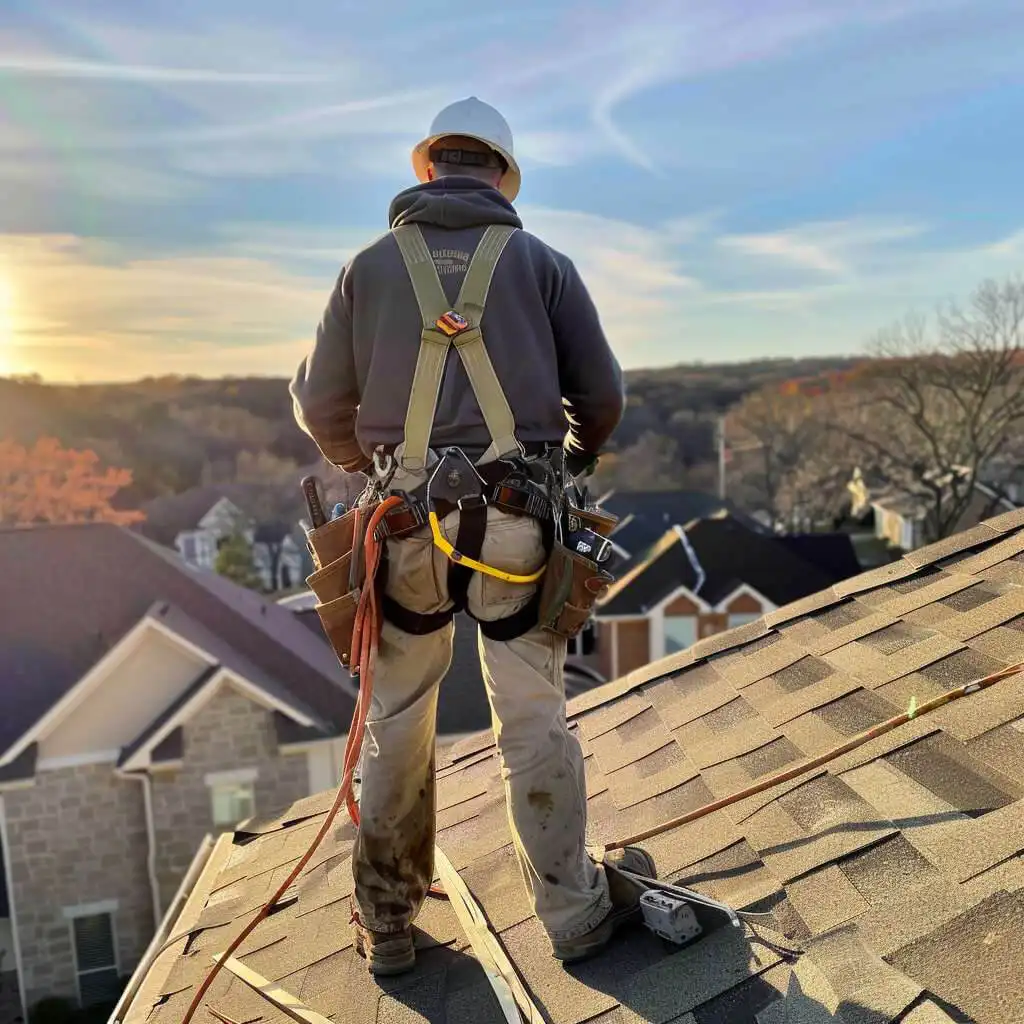
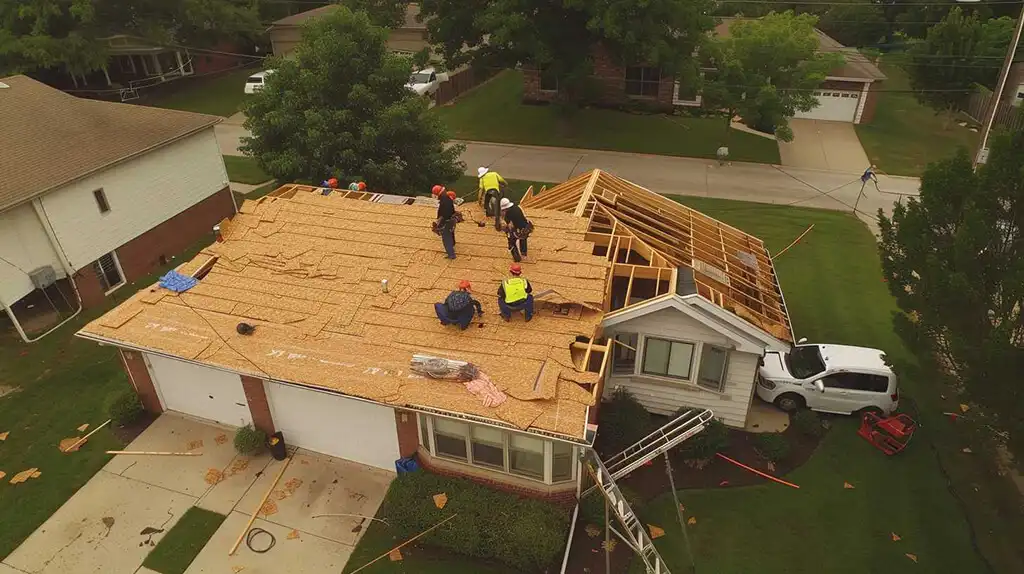
Flat top roofing roofer standing on top a residential home roof
About FlatTop Roofing

A Roof You Replace Once Has to Be Right the First Time

You'll replace a flat roof maybe once in the years you own the building, so the decision that carries weight isn't how fast a crew moves - it's whether the new system actually suits the structure under it and the load it carries. FlatTop spends every week on flat and low-slope roofs around Brooklyn, and that repetition is what lets us read why the current roof failed and put down one that won't fail the same way. A roof that died early from constant wind lift at a high parapet calls for a fully-adhered membrane with nothing for the gusts to catch; a wide, low warehouse deck wants a mechanically-fastened sheet that goes down fast and takes the foot traffic; a structure that can carry stone may do best ballasted. Licensed and insured in New York, and certified by the manufacturers whose warranties we register once the finished roof passes their inspection.

Build the New Roof Against Whatever Killed the Old One

A replacement is wasted if it's just the same roof again in fresh material, so the first thing we settle is what took the last one out - that's the flaw the new build has to design around. A roof that ponded itself to death gets real pitch rebuilt into it with tapered insulation and added drains, not the same dead-level deck under a newer sheet. One that failed at fatigued seams across a big open field is a candidate for wider rolls or a fully-adhered system with fewer laps to work loose. A surface cooked off early by the sun gets a reflective white top that throws the heat back instead of soaking it up, so the membrane doesn't bake the way the last one did. Same building, but the next roof outlasts the last because the weak point that ended it isn't built straight back in.

When Patching Costs More Than Replacing

Every repair has its place - until you add a few years of them together. A seam this spring, a flashing next fall, a wet-board cut-out the year after, plus the ceiling work and the lost use of the space each leak drags along with it: on a roof near the end of its life, two or three seasons of that often runs past what a clean tear-off and new system would have cost outright. A coating only changes that math when the membrane beneath is still dry; over a soaked roof it buys time at the surface while the deck keeps going under it. We'll set the figures next to each other - what continued repairs are realistically costing against a one-time replacement - so the call comes down to arithmetic rather than a pitch.

Stripping the Old Roof Off Without Burying Your Building in It

A replacement opens as a demolition: the spent membrane, the wet insulation, and any failed decking all come off and leave the site. We container and haul the debris as the tear-off moves rather than stacking it on the roof or piling it in your lot. On a large deck the work runs in sections, and we open only as much as the crew can rebuild and seal the same day - new insulation, cover board, and membrane down before they leave it - so the structural deck is never bare overnight when the weather turns. The space below keeps operating throughout, since the work stays up top. Nothing of the dead roof gets layered over or left underneath to trap water against the new one.
Our Services

Expert Flat Roofing Services for Every Need

Professional roofers doing Roof Maintenance & Inspection
Cost Guides
A new TPO or EPDM system, a modified-bitumen recover, a coating, or a one-off leak repair sit at very different price points - and the building's size, roof access, drain count, and how much wet insulation has to come off all move the number. Our cost guides walk through what drives each, so you can read a quote and know exactly what you're paying for.
Professional roofers doing flat roof repairs

Leak Repairs

We don't guess at flat-roof leaks. Flood-testing, seam probing, and infrared moisture scanning on larger roofs let us pinpoint where the membrane has opened up and how far the water has spread underneath before we cut into anything.
Professional roofers doing flat roof repairs

Repair Services

Lifting seams, sun-blistered membrane, cracked flashing, failed pitch pockets, separated drain rings - these are the everyday repairs that keep a sound roof watertight. We use the manufacturer's own seam tape, primers, and flashing details so the fix bonds to your existing system instead of fighting it.
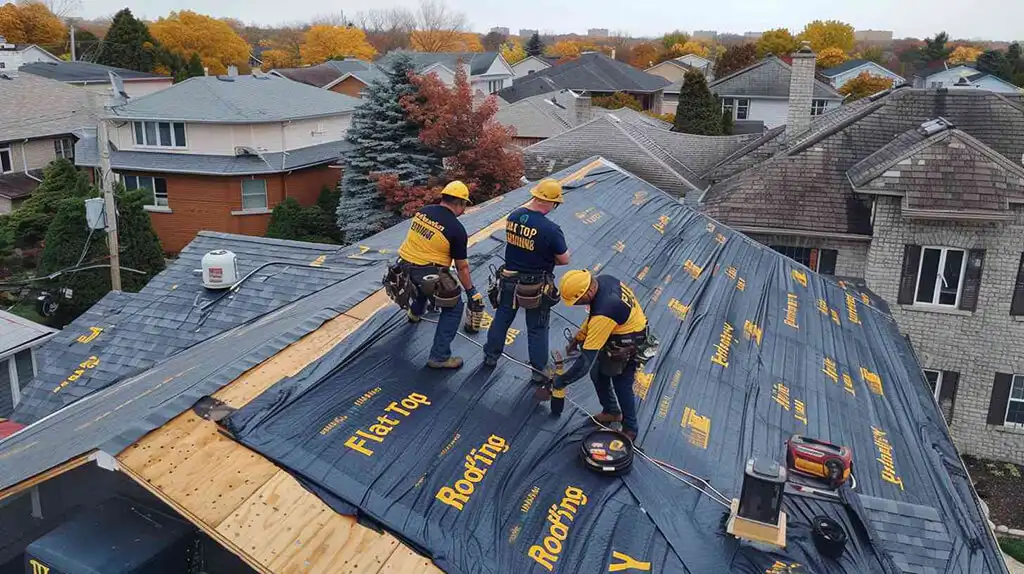
Flat top roofing roofers working on a residential home flat roof

Residential Flat Roofs

Rear roofs on brownstones, rowhouse extensions, and small apartment buildings almost all run flat or low-slope, and they carry their own headaches - tight access, shared parapets, neighbors a few feet away. We repair and replace residential flat roofs with that reality built into the plan.
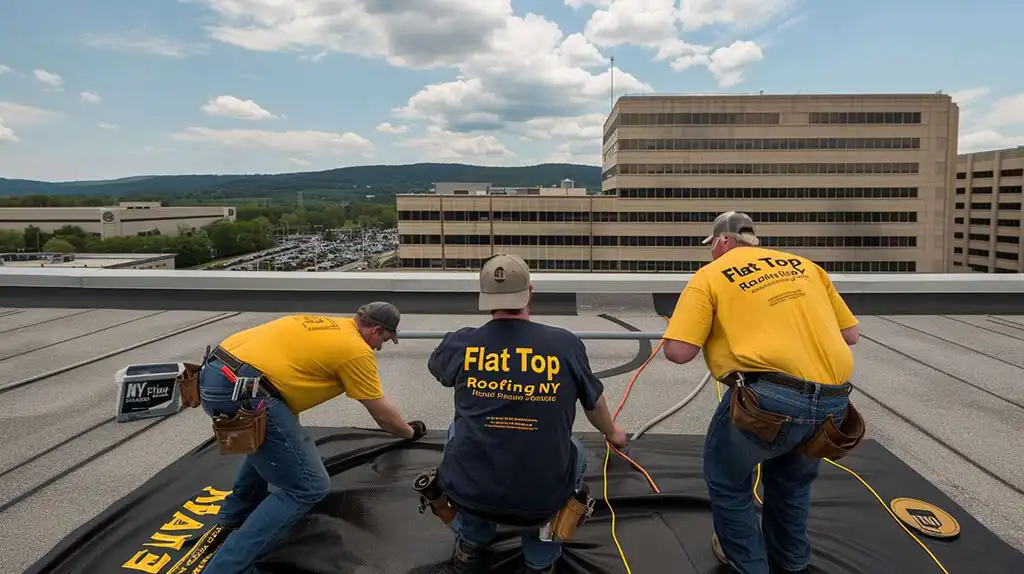
Flat top roofing group of roofers repairing flat roofs

Roof Construction

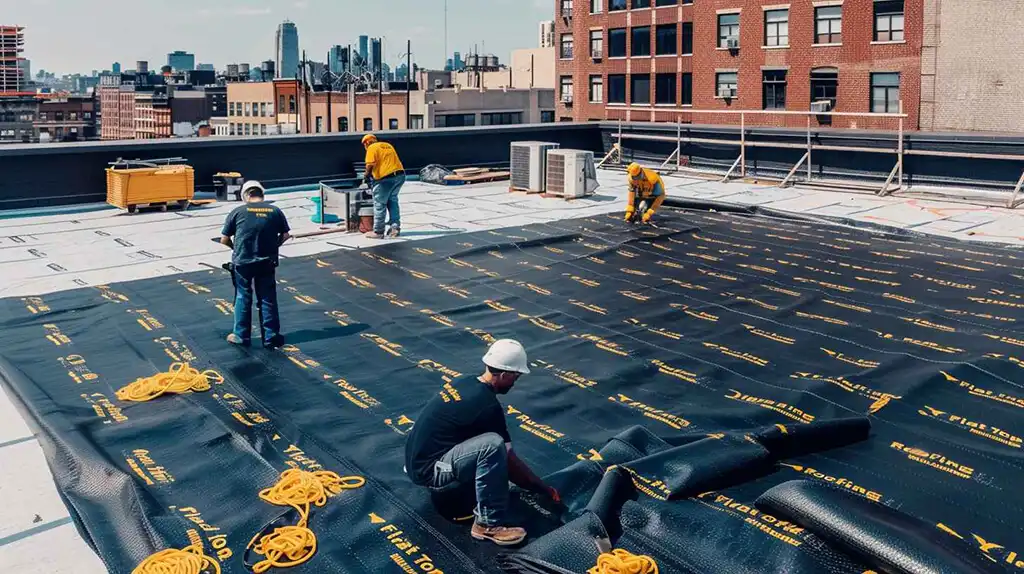
Tear-off down to a clean deck, fresh insulation and cover board, then the membrane - a fully-adhered EPDM, a mechanically-fastened TPO, or a torched modified-bitumen buildup. New construction and gut rebuilds get the same treatment, spec'd to the structure and the load. When a building wants more from its roof, we also install vegetated green-roof assemblies and the curbs, mounts, and flashing that rooftop solar needs to sit watertight.
Flat top roofing group of roofers doing works on a flat roof

Roof Damage and Problems

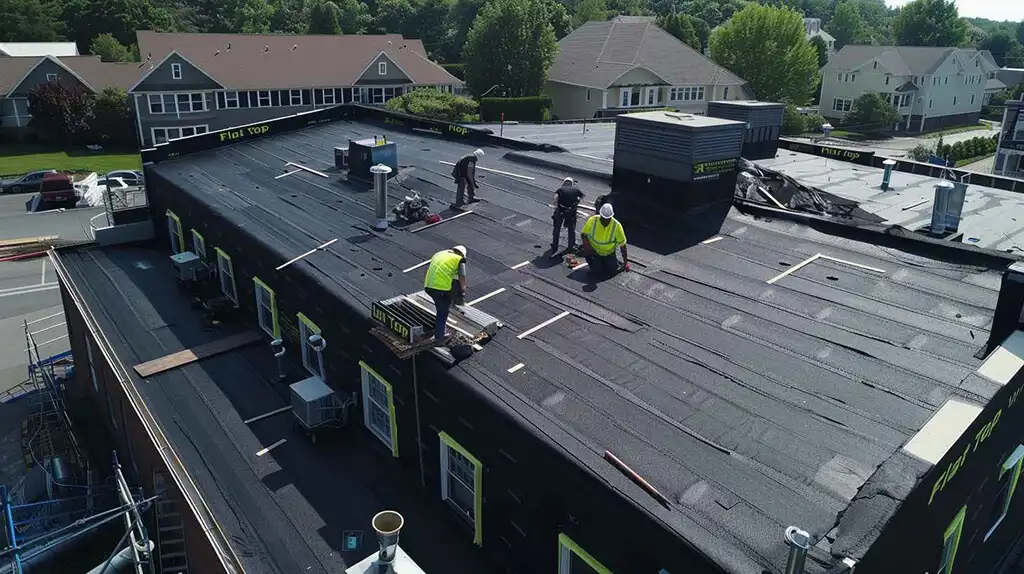
Water that never drains, blisters bubbling up under the heat, membrane shrinking and pulling off the parapets, hail bruising, wind-lifted edges - flat roofs fail in specific, recognizable ways, and each one calls for a different fix: re-sloping, re-flashing, a recover, or a full replacement depending on how far it's gone.

The Replacement Call, Worked Out Before You Sign a Tear-Off

The guides here take on the questions a replacement forces: how to read whether your roof is genuinely finished or has a few seasons left, what a tear-off quote has to spell out so you can hold two bids side by side, what waiting too long actually costs once water reaches the deck, and how the system changes when the decking has to come out too. Each draws on replacements we’ve run on commercial and residential roofs around the borough.
Categories

Questions Owners Ask Before Committing to a New Roof

One contractor quoted a repair and another quoted a full replacement - how do I tell who's right?
Make both show their work. A repair quote should name the specific failures it’s fixing and what it leaves untouched; a replacement quote should explain why the roof can’t be repaired – wide saturation on a moisture scan, a membrane past its service life across the field, decking gone soft. If the replacement bid is just “it’s old, replace it” with no cores pulled and no scan run, that’s a reflex, not a diagnosis. We’ll read a roof someone else has already quoted and tell you straight which of the two it needs, even when the honest answer is the cheaper repair.
Only by the deck line we already flagged. Our replacement quote prices the new system against sound decking and carries a separate per-square-foot rate for any decking that turns out to need replacing – so if more of it is gone than the cores suggested, the increase is that known rate times the extra footage, shown to you with photos before anything covers it. There’s no open-ended “while we’re up here” charge; the single variable is how much bad deck is under there, and you watch it get measured.
Often, yes, when budget is the reason. A roof failing in one large area but holding elsewhere can be replaced in sections across two seasons, with a proper welded transition tying the new work into the part that’s staying until its turn comes. The trade-off is that two mobilizations cost more than one, and a roof that’s uniformly at the end of its life is cheaper and tighter done in a single tear-off. We’ll lay out both so the phasing is a budget choice you make with the numbers in front of you.
Waiting almost always costs more. Once water gets past the membrane it doesn’t stop at a stain – it soaks the insulation, which kills the roof’s R-value, then it sits on the deck and rots it, turning a straightforward tear-off into a tear-off plus structural deck work. Replacing a worn-but-dry roof is the cheaper version of the same job you’ll be doing later for more. If the membrane is clearly done, doing it on your schedule beats doing it the week after a ceiling comes down.
A new EPDM system commonly runs 20 to 30 years, TPO around 20 to 25, modified bitumen 15 to 20 – but those are ceilings, not guarantees. What actually decides it is whether water leaves the roof and whether anyone clears the drains and gives it a look now and then. A roof left to pond gives up years the spec sheet assumed it would keep. Keep the drainage working and the membrane reaches its full term – and that scheduled look is also what keeps the manufacturer warranty in force.
How it works

From Confirming It's Done to Handing You the Warranty

Four steps, and the first one might talk you out of the job.

We get on the roof and confirm it actually needs replacing - cores and a moisture scan to read the insulation and deck, a walk of the seams, flashings, and drains. If a repair or a coating would carry you a few more years, you'll hear that instead of a tear-off quote.

You get a written system spec: the membrane and how it's attached, the slope correction, the insulation and cover board, the tear-off and disposal, a per-square-foot deck allowance, and the warranty - each line priced so the bid holds against anyone else's.

You get a written system spec: the membrane and how it's attached, the slope correction, the insulation and cover board, the tear-off and disposal, a per-square-foot deck allowance, and the warranty - each line priced so the bid holds against anyone else's.

On a warrantied system the manufacturer's field inspector signs off on the finished roof, we register the coverage, and we walk it with you before handing over the warranty paperwork and before-and-after photos for your files.

Request Your FREE Roof Estimate!

Licensed Brooklyn Contractors Ready to Help

Or