Repair Services

A Leaking Flat Roof Is Usually a Repair, Not a Replacement

A leak on a low-slope roof almost always starts at a seam, a flashing, or a drain that's let go - fixable problems on EPDM, TPO, and modified bitumen if they're caught before water reaches the insulation. We find what opened up across Brooklyn's flat roofs and close it.

Request Your FREE Roof Estimate!

Or

FlatTop Roofing

Can a Flat Roof Leak Be Repaired, or Does the Whole Roof Have to Come Off?

A localized leak - one open seam, a cracked pitch pocket, flashing that's pulled off a curb - is a repair. The roof only comes off when water has been getting in long enough to saturate the insulation and soften the cover board underneath, because no patch bonds to a wet, spongy deck. The deciding factor isn't the roof's age; it's how far the water has already traveled under the membrane. A moisture meter and a few test cuts tell us which one you're looking at before anyone quotes a tear-off.
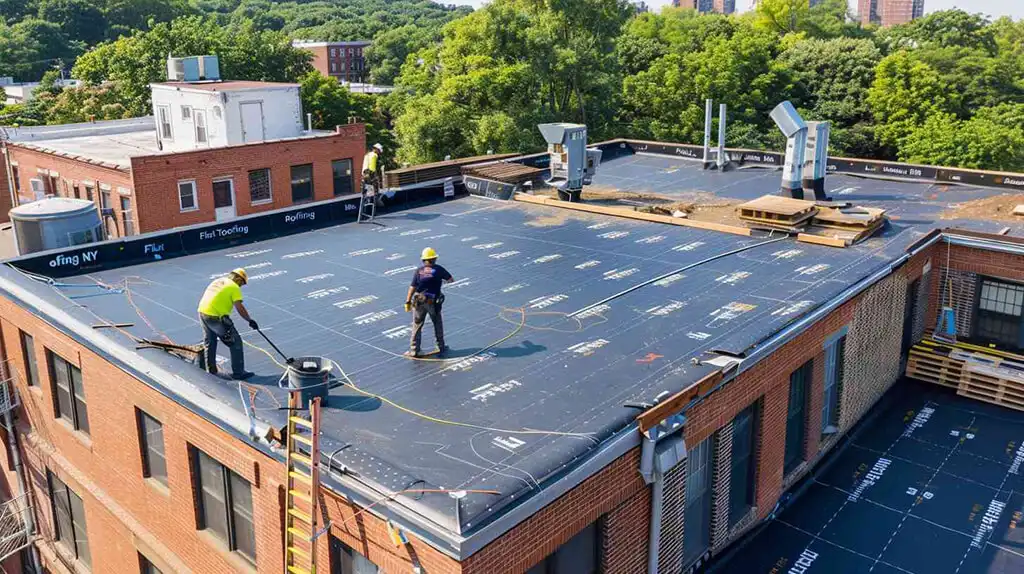
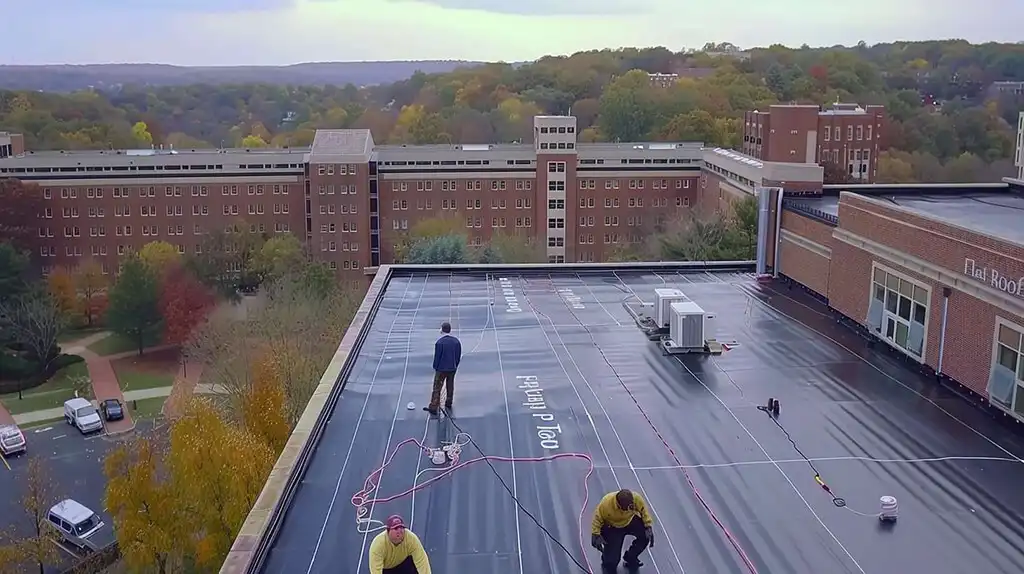
Angle of Flat roofs in Brooklyn NY with roofers

A repair holds when it's welded or torched into the existing membrane with that manufacturer's own materials, so the fix bonds chemically instead of resting on top of the old surface. It also holds when anything wet underneath comes out first - the saturated board gets cut away and the opening is dried before new membrane goes down. Get those two things right and the repaired spot outlasts the rest of the roof; skip either one and you're booking the same call again by spring.

Why Did My Last Flat Roof Repair Open Back Up?

Two reasons account for nearly all of them, and both come down to the patch not matching the roof. The first is sealing over the problem instead of fixing it - a bead of caulk or a smear of wet patch over a moving seam buys a few months, then the joint works open again under the next freeze-thaw cycle. The second is wet insulation left in place; a repair laid over a saturated board sits on a sponge and blisters or delaminates from below no matter how clean the surface work looks.
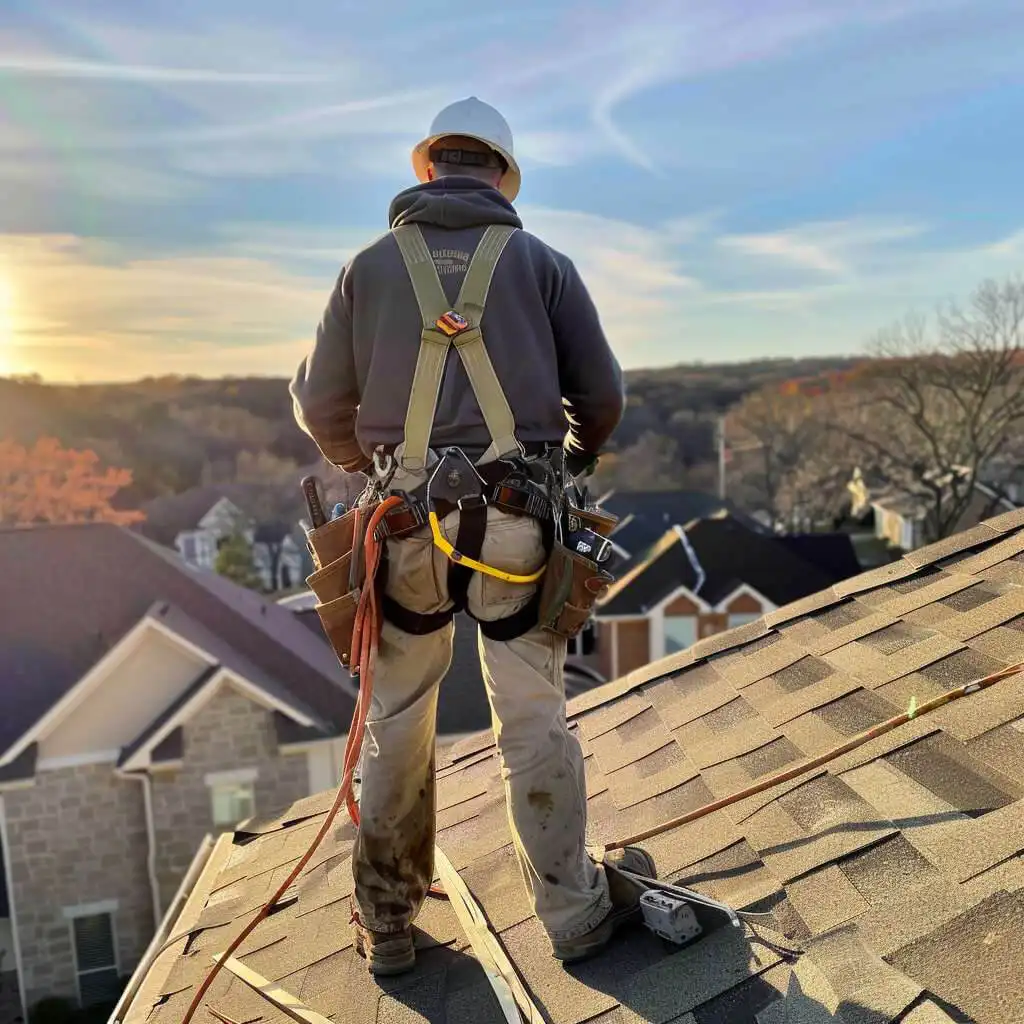
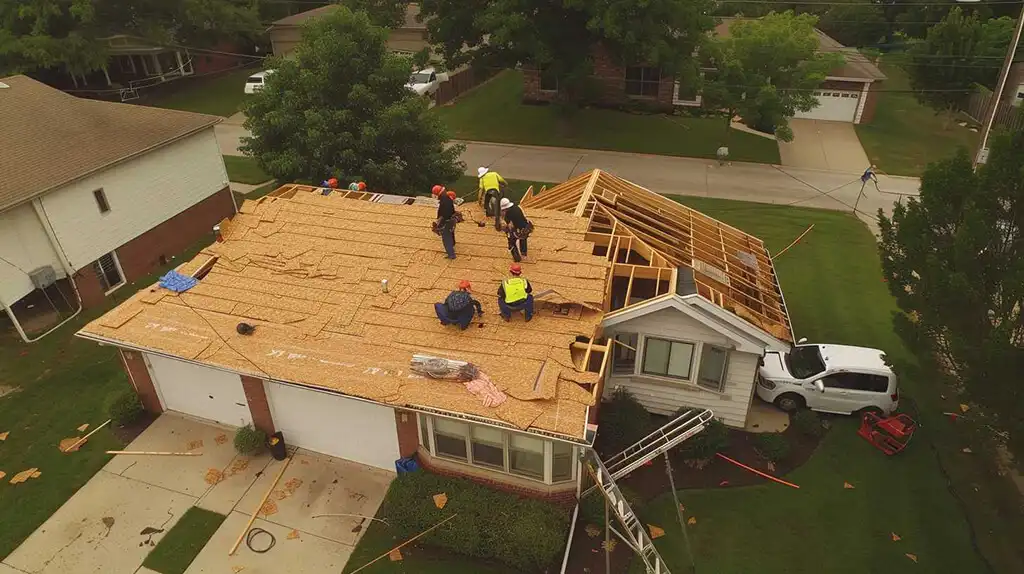
Flat top roofing roofer standing on top a residential home roof
About FlatTop Roofing

The Calls We Take Most Aren't Tear-Offs

Repairs make up the bulk of what FlatTop handles in a normal week across Brooklyn - an open lap seam over a warehouse aisle, a drain that overflowed on an apartment roof, flashing that lifted off a parapet after a windstorm. Working the same three systems constantly is what makes a diagnosis fast: we know how an aging EPDM lap dries out and splits, how a TPO weld line fatigues, and how a mod-bit cap alligators once the surface granules wear thin. Licensed and insured in New York, with a manufacturer certification behind the repairs that qualify for one.

We Repair With the Same System That's Already Up There

A TPO roof gets a TPO weld, an EPDM roof gets EPDM with the matching primer and seam tape, a mod-bit roof gets a torched or self-adhered patch in kind. Mixing materials is how a repair fails - sealants and membranes that don't chemically bond peel apart at the edge. We carry Carlisle, GAF, Firestone, and Mule-Hide details so the fix fuses into your roof rather than bridging over it.

Water Travels Under the Membrane Before It Shows

Water that gets under a single-ply roof runs along the deck and pools wherever the slope lets it, often yards from where it first came in. A repair that only addresses the visible spot leaves soaked insulation spreading underneath the patch. We map the wet area first - a moisture meter and test cuts on a smaller roof, a thermal scan on a big deck - pull out what's saturated, and dry the opening before the new membrane goes down. That's the line between a repair that lasts and one you call us back about in spring.

We Check the Seams Next to the One That Failed

A seam rarely fails because it was uniquely bad. It fails because it's the same age as every other seam on the roof. While we're up there for one repair, we probe the laps and flashings around it, because the joint that goes next is usually a few feet from the one that just did. Catching it now is a short add to a repair already underway; finding it after it leaks is another service call and another wet ceiling.z
Our Services

Expert Flat Roofing Services for Every Need

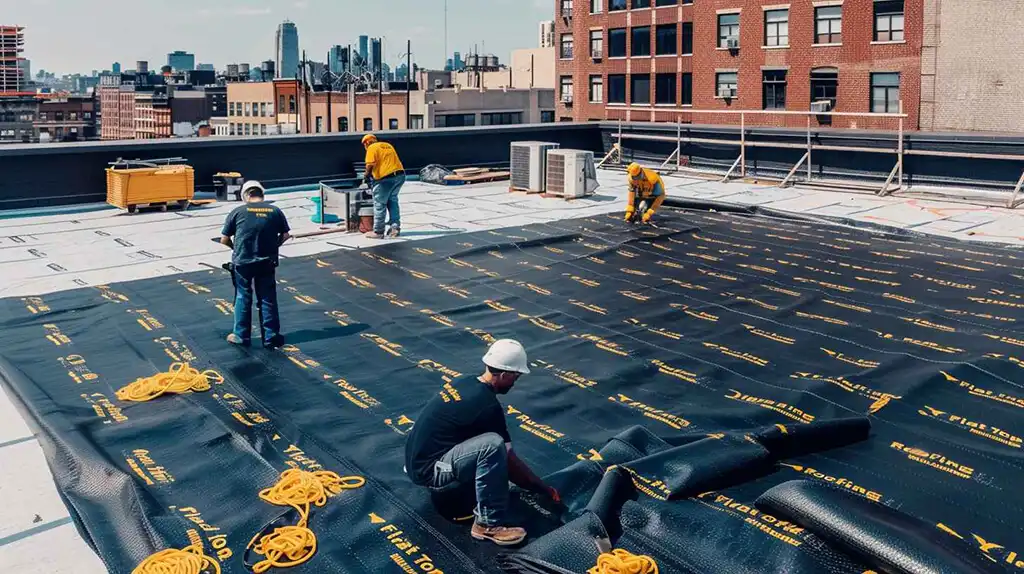
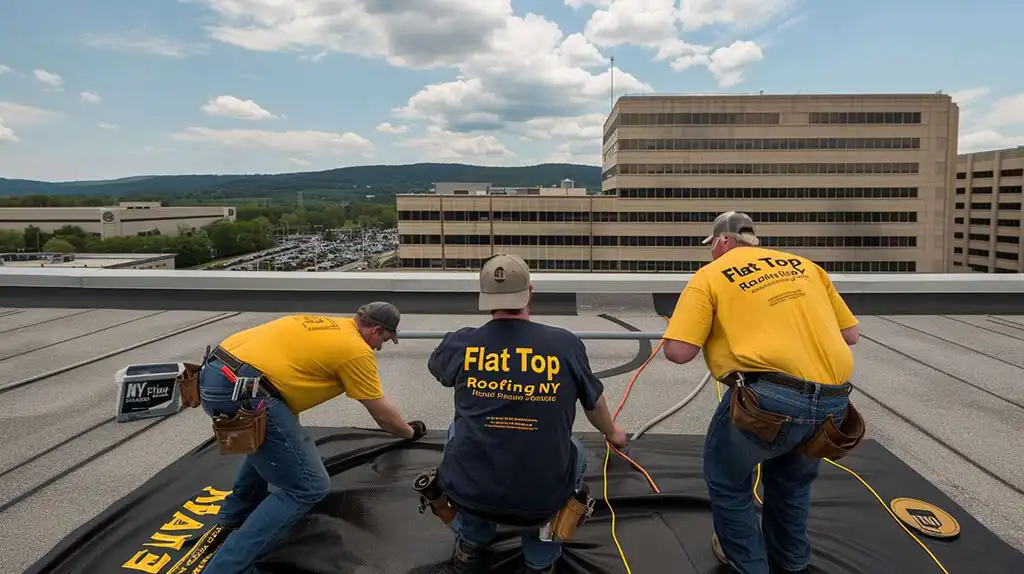
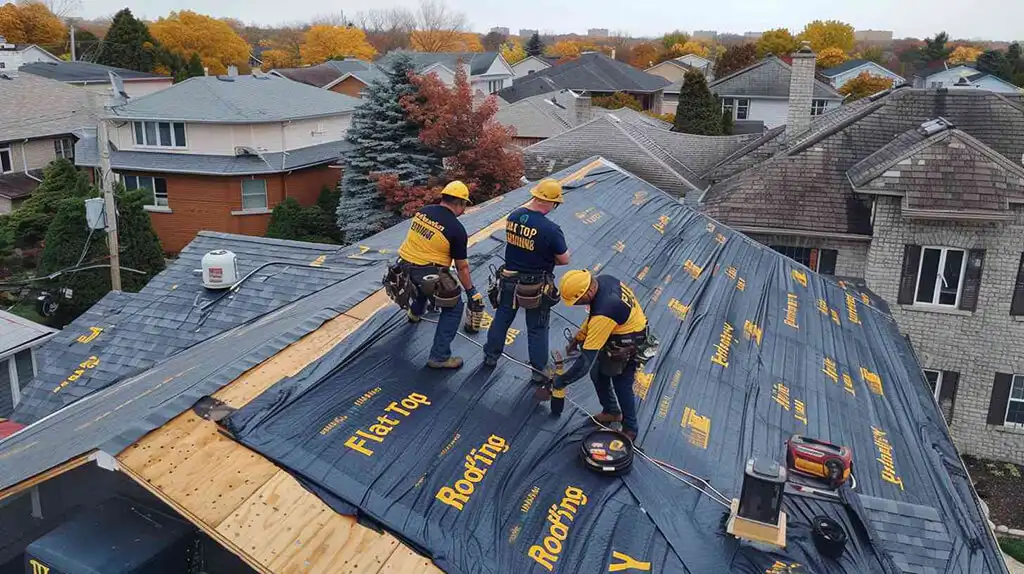
Professional roofers doing Roof Maintenance & Inspection
Cost Guides
A new TPO or EPDM system, a modified-bitumen recover, a coating, or a one-off leak repair sit at very different price points - and the building's size, roof access, drain count, and how much wet insulation has to come off all move the number. Our cost guides walk through what drives each, so you can read a quote and know exactly what you're paying for.
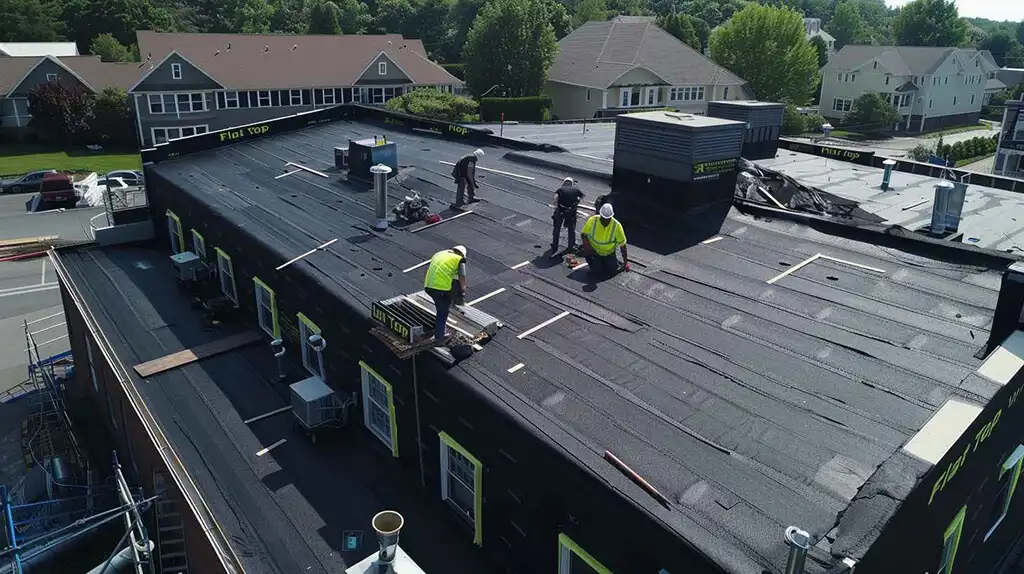
Professional roofers doing flat roof repairs

Leak Repairs

We don't guess at flat-roof leaks. Flood-testing, seam probing, and infrared moisture scanning on larger roofs let us pinpoint where the membrane has opened up and how far the water has spread underneath before we cut into anything.
Professional roofers doing flat roof repairs

Repair Services

Lifting seams, sun-blistered membrane, cracked flashing, failed pitch pockets, separated drain rings - these are the everyday repairs that keep a sound roof watertight. We use the manufacturer's own seam tape, primers, and flashing details so the fix bonds to your existing system instead of fighting it.
Flat top roofing roofers working on a residential home flat roof

Residential Flat Roofs

Rear roofs on brownstones, rowhouse extensions, and small apartment buildings almost all run flat or low-slope, and they carry their own headaches - tight access, shared parapets, neighbors a few feet away. We repair and replace residential flat roofs with that reality built into the plan.
Flat top roofing group of roofers repairing flat roofs

Roof Construction

Tear-off down to a clean deck, fresh insulation and cover board, then the membrane - a fully-adhered EPDM, a mechanically-fastened TPO, or a torched modified-bitumen buildup. New construction and gut rebuilds get the same treatment, spec'd to the structure and the load. When a building wants more from its roof, we also install vegetated green-roof assemblies and the curbs, mounts, and flashing that rooftop solar needs to sit watertight.
Flat top roofing group of roofers doing works on a flat roof

Roof Damage and Problems

Water that never drains, blisters bubbling up under the heat, membrane shrinking and pulling off the parapets, hail bruising, wind-lifted edges - flat roofs fail in specific, recognizable ways, and each one calls for a different fix: re-sloping, re-flashing, a recover, or a full replacement depending on how far it's gone.

Repair Decisions, Worked Through Before You Call

The articles here work through the calls a leak forces on you: how to tell a fixable leak from a failing roof, what a fair repair quote should include, why a patched spot keeps reopening, and what a hard Brooklyn freeze does to an aging seam. Written from actual repair jobs, not pulled off a template.
Categories

Repair Questions We Hear Most

How fast can you get out to an active leak?
Same day when water’s coming into the building – we keep an after-hours line running for exactly that. The first visit gets the water stopped; the permanent repair is scheduled once the surface dries, because membrane welds and adhesives won’t bond to a wet roof. For a slow leak that isn’t threatening the inside, we’re usually out within a few days to diagnose and price it.
Not if it’s done to the manufacturer’s spec, which is how we do them. A warrantied EPDM or TPO system stays covered when repairs use that maker’s approved materials and details – random sealant from a hardware store is what voids coverage. If your roof is still under a manufacturer warranty, tell us who made it and we’ll repair it in a way that keeps the paperwork valid.
A repair done right should hold as long as the surrounding membrane has left in it – not a season, not a year. A welded seam or a rebuilt flashing isn’t a stopgap; it’s the same construction as the original, just newer. The only repair with a short life is one that was the wrong call to begin with, like patching a section that’s saturated underneath, which is why we read what’s below the membrane before quoting one.
Usually, yes. Often it kept leaking because the earlier patches went over a moving seam or a wet board instead of correcting it. We pull the previous repairs back, find what they skipped, and redo the detail properly. The one case where we can’t simply re-patch is when years of leaking have rotted the deck or soaked the insulation across a wide area – then it’s a recover or a section rebuild, and we’ll say so up front.
No. The repair happens on the roof, not in your space, so the floor below keeps running. When a step is loud or needs roof access through the building, we schedule it around your hours and keep the work area off your floor. The only time we come inside is to deal with a ceiling that’s already taking water – and that’s the problem we’re there to end.
How it works

From the Call to a Dry Roof

Four steps, and you know what each one is before we start.

Tell us what you're seeing - a ceiling stain, an active drip, water that won't drain, or a roof that's simply overdue for a look. If it's leaking into the building right now, getting that stopped comes first.

We get up top and find the failure: pressure-checking seams, lifting flashing at curbs and penetrations, checking the drains, and reading how far water has run beneath the membrane.

You get the repair in writing - the materials, the area covered, and a price that holds once the job starts. No moving number halfway through.

We make the permanent repair in your roof's own system, then confirm it's watertight with a flood or hose test and send photos of the finished detail for your records.

Request Your FREE Roof Estimate!

Licensed Brooklyn Contractors Ready to Help

Or